
Gluten-Free Miyoko Butter Recipe
Make this gluten-free Miyoko butter recipe at home with coconut oil, avocado oil, and plant milk. Step-by-step guide with troubleshooting, storage tips, and variations.
My gluten-free Miyoko butter recipe came to life out of desperation the week before Christmas. I was mid-batch of holiday cookies and realized I’d used the last of my Miyoko’s—and the store was closed.
I grabbed my blender, raided my pantry, and 15 minutes later had a creamy, firm vegan butter that actually worked in every cookie I baked that night. I haven’t bought it from the store since.
Could homemade vegan butter really hold up in serious baking? After dozens of test batches, I can tell you—yes, it absolutely can.
Table of Contents
Why You’ll Love This Miyoko Vegan Butter Recipe
- Firms up and slices cleanly: When chilled, this butter sets into a solid block—smooth and dense like cold dairy butter right out of the fridge.
- Beginner-friendly in under 15 minutes active time: If you own a blender, you can make this. No special equipment or technique needed.
- Naturally dairy-free and gluten-free: Every ingredient is plant-based, and there are no hidden allergens or starches to worry about.
- Works as a true 1:1 butter substitute: Spreading, sautéing, baking, sauces—this butter handles all of it without any recipe adjustments.
The Secret to Perfect Gluten-Free Miyoko Butter
Temperature is the single most important factor in this recipe. The emulsion only forms correctly when your oils are at the right temperatures before the plant milk goes in.
- Refined coconut oil = neutral flavor and firm set: Refined coconut oil has no coconut taste and solidifies firmly when chilled—exactly what gives this butter its satisfying, sliceable texture.
- Cold liquid oil stabilizes the emulsion: Pulling your avocado or sunflower oil straight from the fridge creates the temperature contrast needed for the oils to bind properly.
- Slow milk addition builds structure: Drizzling the cold plant milk in gradually—not dumping it all at once—is what transforms the oily mixture into a thick, pale, creamy emulsion.
- Liquid lecithin improves baking performance: This optional emulsifier helps the butter hold together under heat, making it more reliable in pie crusts, cakes, and cookies that need structural fat.
According to trusted celiac research from the Celiac Disease Foundation, verifying that every ingredient—including plant-based milks and oils—comes from a certified gluten-free facility is essential for anyone managing celiac disease or serious gluten sensitivity.
Ingredients For Gluten-Free miyoko butter recipe
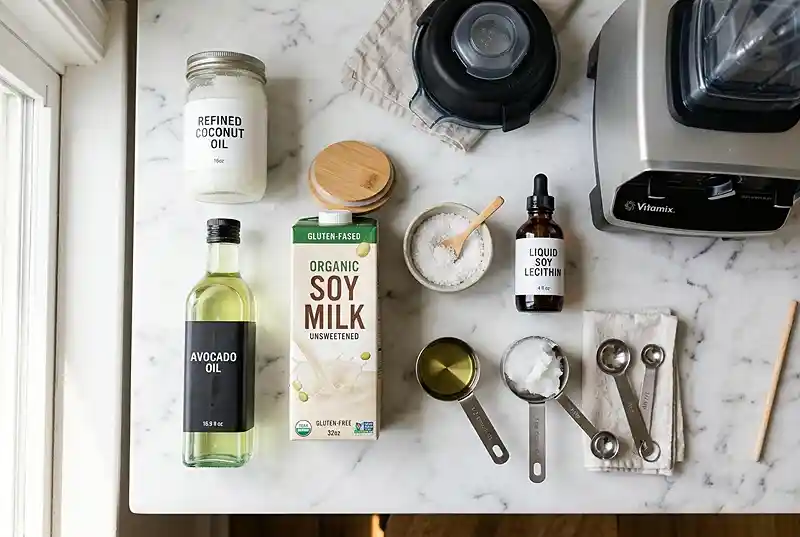
This recipe makes 32 tablespoons (about 2 cups) of firm, spreadable vegan butter.
Solid Fat
| Ingredient | Amount | Notes |
|---|---|---|
| Refined coconut oil, melted | 3/4 cup | Melted but not hot; use refined to avoid coconut flavor |
Liquid Fat
| Ingredient | Amount | Notes |
|---|---|---|
| Avocado oil or sunflower oil | 1 cup | Very cold from the fridge |
Emulsifier / Base
| Ingredient | Amount | Notes |
|---|---|---|
| Plant-based milk | 1/2 to 1 cup | Cold; soy milk works best, but plain unsweetened oat, almond, or cashew milk can work |
Seasoning
| Ingredient | Amount | Notes |
|---|---|---|
| Salt | 1 pinch | Optional, to taste |
Optional Add-In
| Ingredient | Amount | Notes |
|---|---|---|
| Liquid lecithin | 2 teaspoons | Optional; improves firmness and sliceability, especially for baking |
Instructions For Gluten-Free miyoko butter recipe
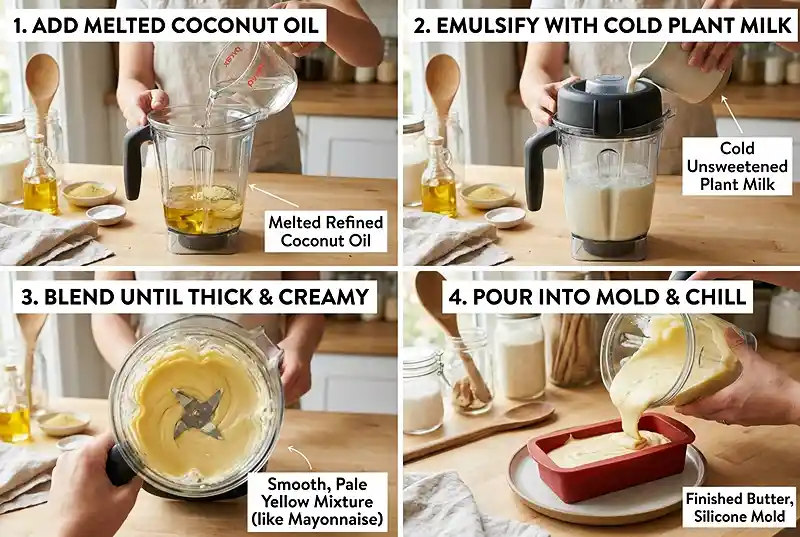
Add the melted but not hot refined coconut oil to a blender or tall container if using an immersion blender. Make sure it’s lukewarm—not steaming—before anything else goes in.
Pour in the very cold liquid oil. The temperature contrast between the cooled coconut oil and cold liquid oil is what helps the emulsion form properly, so don’t skip chilling your oil first.
With the blender running on low, slowly pour in 1/2 cup of cold plant-based milk. A slow, steady drizzle builds a more stable emulsion than adding it all at once.
Blend until the mixture thickens to a pale, creamy, mayonnaise-like consistency, about 1 to 2 minutes. You’ll see it shift from clear and oily to opaque and thick—that’s your cue it’s working.
If you want a softer, more spreadable butter, add more cold plant milk a little at a time, up to 1 cup total, and blend until smooth. Stop adding milk once the texture looks creamy and holds its shape.
Add a pinch of salt if desired and blend for a few seconds to combine. If using liquid lecithin for firmer butter, blend it in now—just a few seconds is enough to incorporate it fully.
Pour the mixture into a small loaf pan, silicone mold, glass jar, or airtight container. Smooth the top with a spatula so it sets evenly.
Refrigerate for at least 2 to 3 hours, or until the butter firms into a solid, scoopable texture. It will look and feel like cold dairy butter when it’s ready.
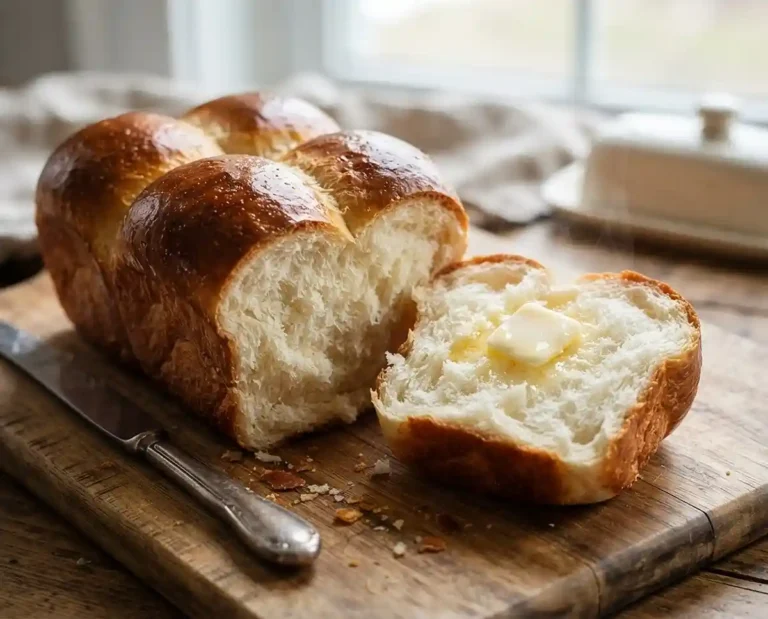
Use as a 1:1 substitute for vegan or dairy butter for spreading, sautéing, baking, sauces, mashed potatoes, or finishing vegetables. It performs cleanly in all of these applications without any recipe changes.
Make It Your Own
Well… the beauty of this gluten-free Miyoko butter is that the base is just a canvas. Once you’ve nailed the emulsion, you can take it in almost any direction.
Choose Your Plant Milk
Soy milk is the top pick for this miyoko’s butter recipe because its higher protein content creates a more stable, firm emulsion. It produces the most consistent results across batches.
Oat milk works well if you want to stay grain-consistent with the original Miyoko’s formula. Just make sure it’s unsweetened, unflavored, and pulled straight from the fridge—warm oat milk will break the emulsion before it starts.
Switch the Liquid Oil
Avocado oil is the gold standard here for its neutral flavor and silky finish. Sunflower oil is a reliable, budget-friendly swap that performs nearly as well in both spreading and baking applications.
Avoid strongly flavored oils like extra-virgin olive oil—they overpower the butter flavor you’re building and can make baked goods taste off.
Add Liquid Lecithin for Baking
You know… if you plan to use this miyoko vegan butter recipe primarily for baking—especially pie crusts, layered cakes, or cookies—adding 2 teaspoons of liquid lecithin is worth it. It acts as an emulsifier that helps the butter stay cohesive under heat.
Without it, the butter still works well for spreading and sautéing. But for precision baking where you need the fat to stay solid and structured, lecithin makes a real difference in the final result.
Make Herb or Compound Butter
Once the butter is fully blended, fold in finely minced fresh herbs—chives, rosemary, or dill all work beautifully. Pour into a silicone mold and chill for a polished compound butter that’s stunning on bread or roasted vegetables.
For a sweet version, blend in a small amount of maple syrup and vanilla extract before chilling. It’s wonderful spread on pancakes or warm gluten-free muffins, and pairs perfectly with my gluten-free blueberry peach yogurt bark for a summer brunch spread.
Common Problems & Solutions
Man, oh man… I’ve broken this emulsion more times than I care to admit. Here’s exactly what went wrong and how I fixed it each time.
Problem: The Mixture Won’t Thicken
Solution: Check both oil temperatures before you restart. If the coconut oil was still too warm or the liquid oil wasn’t cold enough from the fridge, the emulsion won’t form. Let the coconut oil cool to lukewarm and re-chill your liquid oil for 20 minutes before trying again.
Also make sure you’re adding the plant milk slowly. Pouring it in all at once is the fastest way to prevent emulsification—it overwhelms the fat molecules before they can bond.
Problem: The Butter Won’t Firm Up After Chilling
Solution: Reduce the plant milk in your next batch. If you added close to 1 cup of milk, the ratio may be too liquid-heavy to set firmly at refrigerator temperature. Start with 1/2 cup next time and only add more if the texture looks too thick while blending.
If the current batch is too soft, you can try re-blending with an extra tablespoon of melted coconut oil and chilling again—this sometimes rescues a soft batch without starting over.
Problem: The Butter Tastes Flat
Solution: Season more generously and add depth with a small amount of nutritional yeast. Plant-based fats without enough salt taste hollow. Add salt gradually while blending, tasting after each addition until the flavor feels satisfying and rich.
A teaspoon of nutritional yeast blended in adds a savory, slightly cheesy undertone that rounds out the flavor significantly—especially if you’re using this butter for cooking rather than just spreading.
Problem: The Butter Separated in the Fridge
Solution: Re-blend it. Separation usually means the emulsion wasn’t fully formed before pouring. Let the butter come back to room temperature for 10 minutes, return it to the blender, and re-blend on medium until creamy before chilling again.
Adding 2 teaspoons of liquid lecithin during re-blending will help stabilize it and prevent separation in future batches. The FDA’s guidance on food emulsifiers confirms that lecithin is one of the most effective naturally derived emulsifying agents available for home cooking.
Storage & Meal Prep
| Method | Duration | Notes |
|---|---|---|
| Counter | 2-3 days | Airtight container; warm kitchens may soften it quickly |
| Fridge | 5-7 days | Bring to room temperature 10 minutes before spreading |
| Freezer | 2-3 months | Wrap individually in parchment and store in a freezer bag |
To freeze, pour the blended butter into a silicone ice cube tray or a parchment-lined loaf pan. Once solid, transfer the portions to a freezer-safe bag. Individual cubes can go directly from frozen into a hot pan—no thawing needed for cooking.
For baking, thaw overnight in the refrigerator so the butter firms back up to its original texture before you measure it. This keeps it performing like cold butter in pastry applications.
Gluten-Free miyoko butter recipe FAQs
Can I substitute the coconut oil with another solid fat?
Coconut oil is essential here because it solidifies at refrigerator temperature, which is what gives the butter its firm, sliceable texture. Cacao butter is the closest alternative—it also solidifies when chilled and has a mild flavor. Other liquid oils won’t firm up properly and will result in a sauce rather than a spreadable butter.
How long does homemade Miyoko butter last in the fridge?
Stored in an airtight container, this butter keeps well for 5 to 7 days in the refrigerator. For longer storage, freeze it in individual portions for up to 3 months and thaw overnight in the fridge before using in baking.
Can I use this recipe for sautéing vegetables over high heat?
This butter works well for sautéing at medium heat. At high heat, the coconut oil base can brown quickly, so keep the temperature at medium or lower for best results. For high-heat cooking, a plain avocado oil or sunflower oil will hold up better without smoking.
What plant milk works best if I want the firmest result?
Soy milk produces the firmest, most stable butter because of its higher protein content. The protein helps the emulsion set more solidly when chilled. Oat, almond, and cashew milk all work but may result in a slightly softer texture.
Is liquid lecithin necessary for this recipe?
No, liquid lecithin is optional. The butter comes together without it and works well for spreading and everyday cooking. However, if you plan to use this butter primarily for baking—especially in pie crusts or layered cakes—adding 2 teaspoons of liquid lecithin significantly improves firmness and structural performance under heat.
Serving Suggestions

This butter is wonderful spread thick on warm gluten-free sourdough or melted into a bowl of silky mashed sweet potatoes. The herb version is a standout at Easter brunch or a spring dinner party—roll it into a log with fresh chives and slice it tableside.
It also works beautifully as the fat component in fruit-forward baked goods. Try using it in the crust of my blackberry peach upside-down cake for a tender, flavorful base that holds together cleanly.
For a refreshing no-bake pairing, make a batch of my dairy-free key lime pudding cups alongside—both are simple, plant-based, and ready in well under an hour.
If you tried this recipe, I’d genuinely love to hear how it went. Drop a comment below with your oil choice, any variations you tried, or what you baked with it first—and if it worked for you, sharing it on Pinterest helps other gluten-free home cooks find it too.

Simple Gluten-Free Miyoko Butter Recipe Ready in 15 Minutes
Equipment
- Blender or Immersion Blender
- Tall Container
- Spatula
- Small Loaf Pan, Silicone Mold, Glass Jar, or Airtight Container
Ingredients
Solid Fat
- ¾ cup Refined coconut oil, melted Melted but not hot; use refined to avoid coconut flavor
Liquid Fat
- 1 cup Avocado oil or sunflower oil Very cold from the fridge
Emulsifier / Base
- 1/2-1 cup Plant-based milk Cold; soy milk works best, but plain unsweetened oat, almond, or cashew milk can work
Seasoning
- 1 pinch Salt Optional, to taste
Optional Add-In
- 2 tsp Liquid lecithin Optional; improves firmness and sliceability, especially for baking
Instructions
- Add the melted but not hot refined coconut oil to a blender or tall container. Ensure it is lukewarm, not steaming.
- Pour in the very cold avocado or sunflower oil and blend briefly.
- With the blender running on low, slowly drizzle in 1/2 cup cold plant-based milk.
- Blend for 1 to 2 minutes until the mixture becomes pale, creamy, and mayonnaise-like.
- Add additional cold plant milk gradually, up to 1 cup total, if a softer butter is desired. Blend until smooth.
- Add salt and liquid lecithin if using, then blend briefly to combine.
- Pour the mixture into a loaf pan, silicone mold, jar, or airtight container and smooth the surface.
- Refrigerate for at least 2 to 3 hours until firm and scoopable.
- Use as a 1:1 substitute for dairy or vegan butter in spreading, baking, sautéing, sauces, and other recipes.