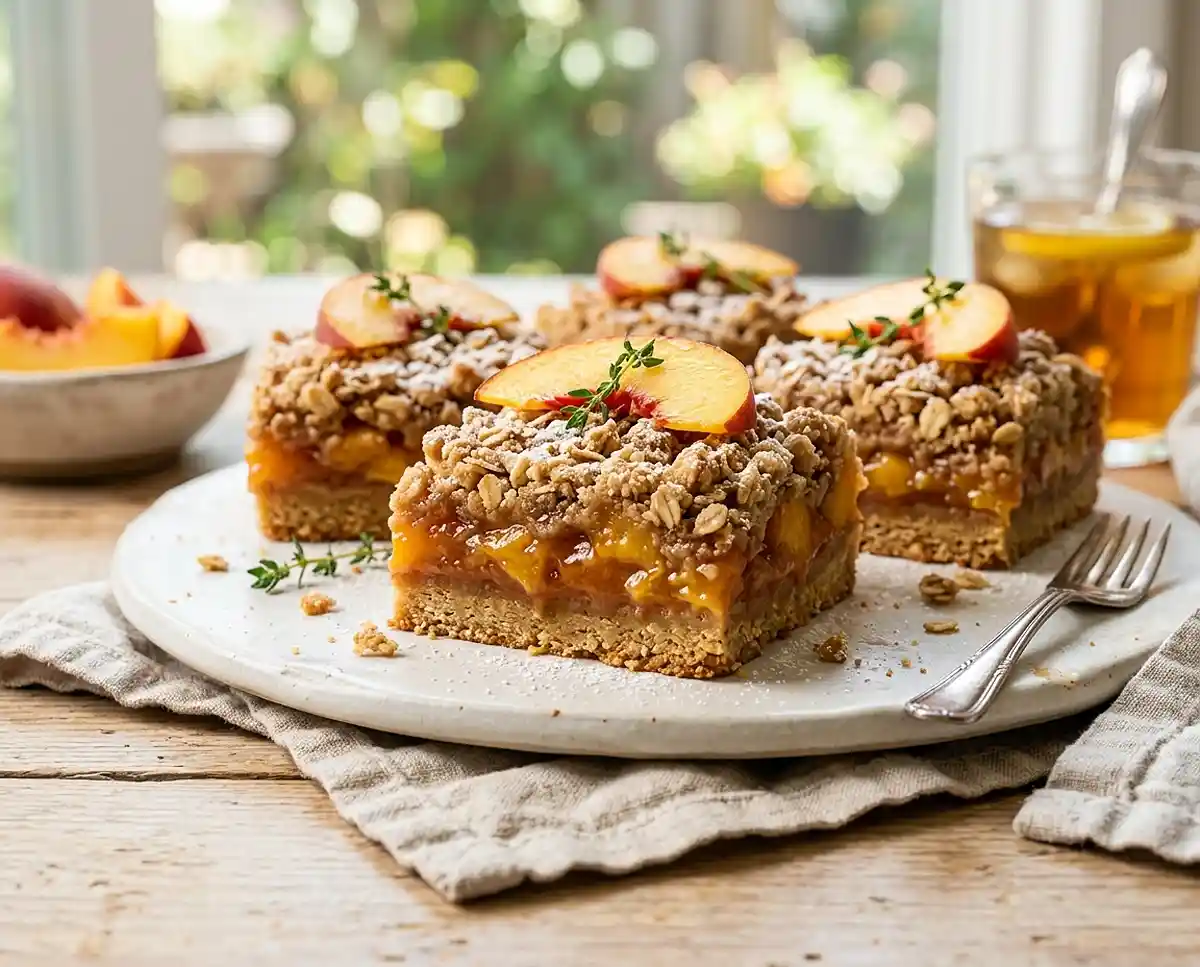
Gluten-Free Peach Cobbler Cookie Bars
Gluten-Free Peach Cobbler Cookie Bars | Easy Recipe Make gluten-free peach cobbler cookie bars with a buttery base, juicy peach filling, and oat crumble topping. Step-by-step recipe with storage tips included.
The first time I brought gluten-free peach cobbler cookie bars to a Fourth of July cookout, I honestly wasn’t sure they’d hold together long enough to make it to the dessert table. I’d had so many crumbly GF bar disasters before that I almost didn’t bring them—but that batch came out with clean edges, a jammy peach center, and a topping that actually crumbled instead of turning to dust. Every last bar disappeared before the fireworks started.
What makes these different from a regular peach cobbler dessert is portability. You can stack them, wrap them, hand them to a kid without a plate, and they stay together beautifully. Well… that alone makes them worth making on a hot summer afternoon when you just want something that works without babysitting it.
Table of Contents
Why You’ll Love This Gluten-Free Peach Cobbler Cookie Bar Recipe
- Texture that holds: The cookie base sets firm enough to slice but stays tender—not gritty, not gummy. Each bite layers soft dough against peach filling that thickens like fruit preserves as it bakes.
- Beginner-friendly: No chilling, no rolling, no fussy steps. If you can press dough into a pan, you can make these.
- Naturally adaptable: Easy to make dairy-free with one simple swap (see below), and kid-approved without adjustments.
- Works for any occasion: Peak summer baking when fresh peaches are in season, but frozen peaches work just as well in January.
The Secret to Perfect Gluten-Free Peach Cobbler Cookie Bars
- Cornstarch in the filling is non-negotiable. Peaches release a surprising amount of liquid as they bake. The 1 tbsp of cornstarch binds that juice into a glossy, jammy layer instead of a soggy puddle that soaks through the base.
- Brown sugar does double duty. Using ¾ cup brown sugar in the dough adds moisture and a faint caramel depth that plain granulated sugar can’t replicate. According to the Celiac Disease Foundation’s guidance on gluten-free baking, moisture retention is one of the biggest challenges in GF baked goods—brown sugar helps solve that.
- The two-thirds/one-third dough split matters. Pressing too much dough on top smothers the filling; too little and the bars fall apart when cut. Two-thirds base, one-third crumble hits the structural sweet spot.
- Cooling completely before slicing isn’t optional. The peach filling needs time to set as it cools, or you’ll cut into a beautiful mess. Give it at least 45 minutes at room temperature.
Ingredients
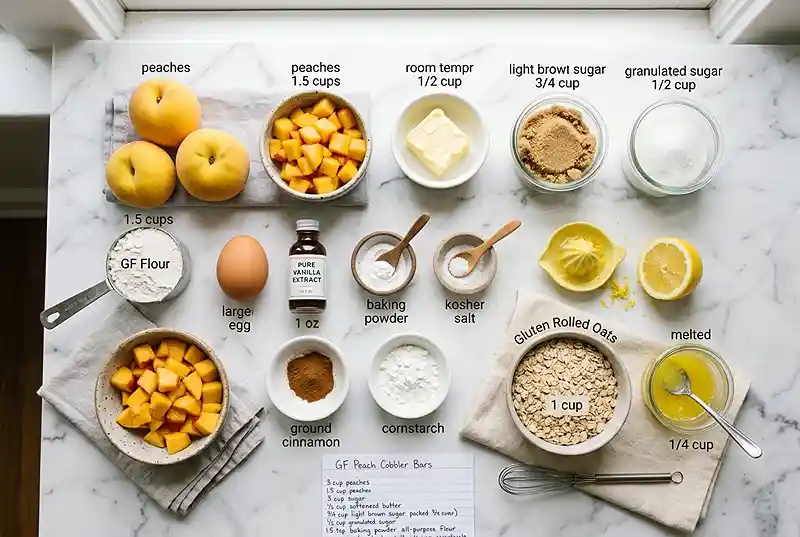
Makes 16 bars
Cookie Base
| Ingredient | Amount | Notes |
|---|---|---|
| Unsalted butter, softened | 1 cup | Room temperature is key for proper creaming |
| Brown sugar | ¾ cup | Packed |
| Granulated sugar | ¼ cup | |
| Large egg | 1 | |
| Vanilla extract | 1 tsp | |
| Gluten-free all-purpose flour | 2 cups | Use a blend with xanthan gum included |
| Baking powder | ½ tsp | |
| Salt | ½ tsp |
Peach Filling
| Ingredient | Amount | Notes |
|---|---|---|
| Peaches, peeled and diced | 3 cups | Fresh or thawed frozen; pat dry if using frozen |
| Brown sugar | ¼ cup | |
| Cornstarch | 1 tbsp | Thickens the filling as it bakes |
| Cinnamon | 1 tsp | |
| Lemon juice | 1 tbsp | Brightens the fruit and balances sweetness |
Topping
| Ingredient | Amount | Notes |
|---|---|---|
| Gluten-free rolled oats | ½ cup | Certified GF oats only |
| Brown sugar | 2 tbsp | |
| Melted butter | 2 tbsp |
Instructions
1. Prep your pan and oven. Preheat the oven to 350°F (175°C). Line a 9×13-inch baking pan with parchment paper, leaving a little overhang on the sides—this makes lifting the bars out effortless later.
2. Cream the butter and sugars. Beat together the 1 cup softened butter, ¾ cup brown sugar, and ¼ cup granulated sugar until the mixture is pale and slightly fluffy, about 2-3 minutes. You’re looking for it to lighten in color—that air is what keeps the base tender. Beat in the egg and 1 tsp vanilla extract until just combined.
3. Mix in the dry ingredients. Add the 2 cups gluten-free all-purpose flour, ½ tsp baking powder, and ½ tsp salt. Mix until a soft dough forms that pulls away from the bowl. It’ll be a little stickier than traditional cookie dough—that’s completely normal with GF flour blends.
Pro Tip: If the dough feels too sticky to handle, refrigerate it for 10 minutes. It firms up quickly and becomes much easier to press into the pan.
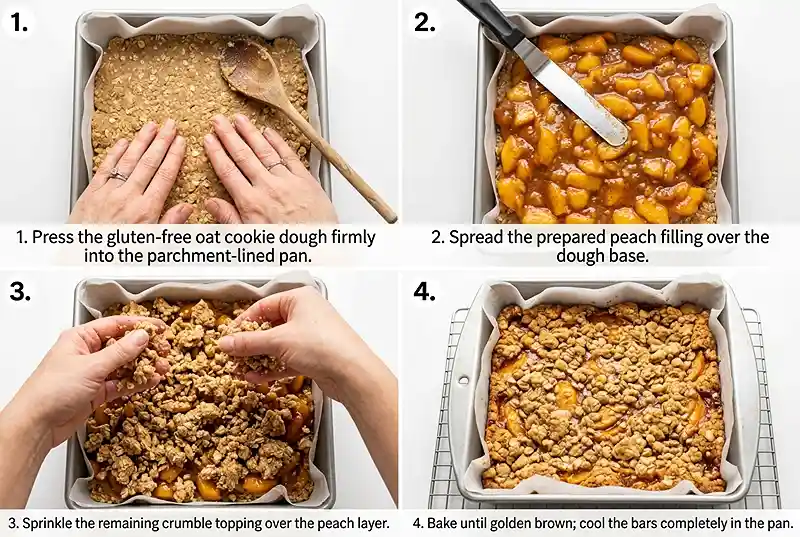
4. Build the base. Press about two-thirds of the dough evenly into the prepared pan using clean hands or the bottom of a measuring cup. Aim for an even layer about ¼ inch thick—thin spots will overbake before the center is done.
5. Make the peach filling. In a bowl, combine the 3 cups diced peaches, ¼ cup brown sugar, 1 tbsp cornstarch, 1 tsp cinnamon, and 1 tbsp lemon juice. Toss until every piece of peach is coated, then spread the filling evenly over the dough base. The filling will look almost too juicy at this point—trust the process.
6. Add the crumble layer. Pinch off pieces of the remaining dough and scatter them across the peach filling. You want uneven chunks, not a solid sheet—those gaps let steam escape and give you that cobbler-style look.
7. Mix and sprinkle the oat topping. Stir together the ½ cup gluten-free rolled oats, 2 tbsp brown sugar, and 2 tbsp melted butter until clumpy. Sprinkle over the top of the crumbled dough. This layer toasts into something that crunches like a streusel and smells like a bakery the minute it hits heat.
8. Bake until golden and set. Bake for 35–40 minutes, or until the top is golden brown, the edges are pulling slightly from the pan, and you can see the peach filling bubbling up through the gaps. That gentle bubbling is your signal the cornstarch has activated and the filling is setting.
Pro Tip: At the 30-minute mark, check the edges. If they’re browning too fast, tent loosely with foil for the remaining bake time.
9. Cool completely before slicing. This is the hardest step, but it’s everything. Let the bars cool in the pan for at least 45-60 minutes before lifting them out and slicing into 16 bars. Cutting too early will give you a gooey, falling-apart situation—worth the wait.
Make It Your Own
Dairy-free version: Swap the 1 cup butter for an equal amount of vegan butter (stick-style, not spread). The texture stays nearly identical because you’re still creaming solid fat with sugar—the same structural principle applies. The 2 tbsp melted butter in the topping can be replaced with melted coconut oil for a faint tropical undertone that actually plays nicely with peach.
Frozen peaches work great. Thaw them completely and pat them dry with paper towels before mixing the filling. Excess water from frozen fruit is the enemy of a clean-slicing bar—this one extra step prevents a soggy bottom. These make great gluten-free cookie bars year-round, not just during peak peach season.
Swap the fruit. Nectarines, pluots, or a mix of peach and blueberry all work in the filling. Stick with the same 3 cups total and keep the cornstarch—every stone fruit releases liquid as it bakes. You know… this is one of those recipes that changes its personality completely depending on what’s ripe at the market.
Add a warm spice layer. A pinch of cardamom or nutmeg alongside the cinnamon adds a faintly exotic warmth to the peach cobbler dessert flavor profile without overpowering the fruit.
Common Problems & Solutions
Problem: The bars are falling apart when sliced. → They needed more cooling time. The cornstarch-thickened filling sets as it cools, just like a pie. If you cut in while the pan is still warm, the filling is still liquid and the dough layers haven’t fully firmed. Give it a full hour—longer if your kitchen is warm—before slicing.
Problem: The base layer is gummy or undercooked. → Check your GF flour blend and oven temperature. Some gluten-free flour blends hold more moisture than others, which can lead to a gummy texture if the base doesn’t bake through. Make sure your oven is fully preheated before the pan goes in, and use a blend that contains xanthan gum for proper binding. An oven thermometer is one of the best investments a GF baker can make—per King Arthur Baking’s gluten-free baking resources, temperature accuracy is critical for GF recipes.
Problem: The topping burned before the center baked. → Tent with foil at the 30-minute mark. Man, oh man… this one caught me off guard the first time too. The oat and sugar topping can brown fast, especially in a convection oven. A loose foil tent slows the surface browning while the interior catches up.
Problem: The peach filling is too runny even after cooling. → Your peaches had extra liquid. This happens with very ripe fresh peaches or insufficiently dried frozen ones. Next time, toss the peaches in the cornstarch mixture and let them sit for 5 minutes—you’ll actually see some syrup form before it even hits the pan. You can also increase the cornstarch to 1½ tbsp for particularly juicy fruit.
Storage & Meal Prep
| Method | Duration | Notes |
|---|---|---|
| Counter | 2-3 days | Airtight container, single layers separated by parchment |
| Fridge | 5-7 days | Bring to room temperature before serving |
| Freezer | 2-3 months | Wrap individually in plastic wrap, then store in a freezer bag |
To reheat, a 20-second microwave burst brings refrigerated bars back to that fresh-baked warmth. For the full cobbler experience, pop them in a 300°F oven for 8-10 minutes—the topping crisps back up beautifully. These bars are a great make-ahead option for weekend meal prep: bake on Sunday, slice, and refrigerate for grab-and-go snacks all week.
FAQs About Gluten-Free Peach Cobbler Cookie Bars
Can I use canned peaches instead of fresh?
Yes, but drain them very thoroughly first. Canned peaches sit in syrup, which adds excess liquid that even cornstarch struggles to tame. Drain, rinse, and pat dry with paper towels before using. You may also want to reduce the brown sugar in the filling by half since canned peaches are already sweetened.
How do I know when the bars are fully baked?
Look for golden-brown edges, a set (not jiggly) center, and visible bubbling in the filling. The bubbling is the clearest sign the cornstarch has activated and is doing its thickening job. If the center still looks wet and moves when you shake the pan, give it 5 more minutes.
What’s the best gluten-free flour for this recipe?
A 1-to-1 GF all-purpose blend that already contains xanthan gum is your best bet. Xanthan gum mimics the binding that gluten provides in traditional dough, which is what keeps the base from crumbling. Single-ingredient flours like almond flour or rice flour alone won’t behave the same way without additional binders.
Why did my dough crumble instead of pressing into the pan?
Your butter was likely too cold. Properly softened butter—meaning it leaves a slight indent when pressed but isn’t greasy—creams with the sugars to form a cohesive, pliable dough. Cold butter doesn’t cream; it just breaks into chunks. If this happens, let the dough sit at room temperature for 10 minutes, then try pressing again.
Can I make these bars ahead for a party?
Absolutely—they actually slice better the next day. The filling firms up overnight in the fridge, giving you clean, bakery-style cuts. Bake the day before, cool completely, cover the pan with plastic wrap, and refrigerate. Bring to room temperature for 30 minutes before serving.
Serving Suggestions
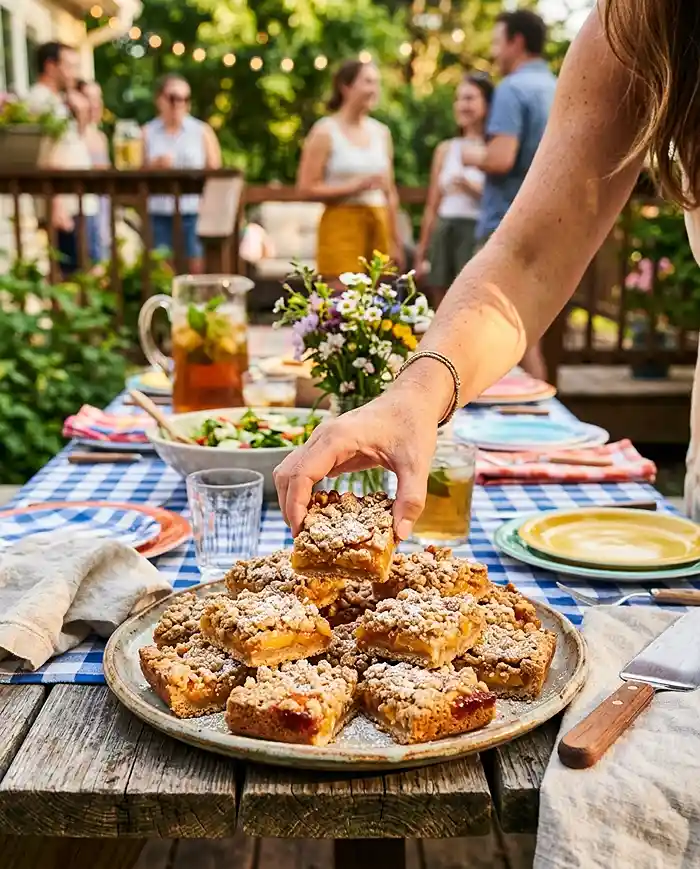
These bars are at their best slightly warm with a scoop of vanilla ice cream or a dollop of whipped cream—the contrast between the cool cream and the warm fruit layer is like sunshine on a plate. They’re a natural fit alongside other summer party bites; pair them with these creamy dairy-free lemonade pie cups for a full dessert spread that covers every dietary base.
For a casual summer gathering or a Labor Day backyard party, these portable peach cobbler dessert bars make passing around a dessert plate genuinely easy. If you’re building out a full appetizer-to-dessert menu, these gluten-free potato stack appetizers make a savory counterpart worth bookmarking, and these whipped ricotta berry toast bites add a light, fresh note before the main event.
If you try these gluten-free peach cobbler cookie bars, I’d genuinely love to hear how they turned out—drop a comment below and let me know if you made any swaps or additions. Pin this one to your summer baking board so you can find it again when peach season hits, and leave a star rating if you get a chance—it helps more families find recipes that actually work.
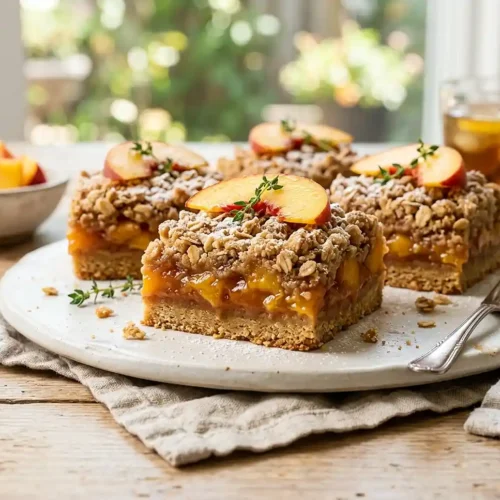
Gluten-Free Peach Cobbler Cookie Bars
Equipment
- 9×13 inch baking pan
- Parchment paper
- Stand mixer or hand mixer
- Large mixing bowl
- Medium mixing bowl
- Measuring cups and spoons
Ingredients
Cookie Base
- 1 cup unsalted butter, softened Room temperature is key for proper creaming
- ¾ cup brown sugar Packed
- ¼ cup granulated sugar
- 1 large egg
- 1 tsp vanilla extract
- 2 cups gluten-free all-purpose flour Use a blend with xanthan gum included
- ½ tsp baking powder
- ½ tsp salt
Peach Filling
- 3 cups peaches, peeled and diced Fresh or thawed frozen; pat dry if using frozen
- ¼ cup brown sugar
- 1 tbsp cornstarch Thickens the filling as it bakes
- 1 tsp cinnamon
- 1 tbsp lemon juice Brightens the fruit and balances sweetness
Topping
- ½ cup gluten-free rolled oats Certified GF oats only
- 2 tbsp brown sugar
- 2 tbsp melted butter
Instructions
- Preheat the oven to 350°F (175°C). Line a 9×13-inch baking pan with parchment paper, leaving a little overhang on the sides to make lifting the bars out easier later.
- Beat together the softened butter, brown sugar, and granulated sugar until the mixture is pale and slightly fluffy, about 2–3 minutes. Beat in the egg and vanilla extract until just combined.
- Add the gluten-free all-purpose flour, baking powder, and salt. Mix until a soft dough forms that pulls away from the bowl. The dough will be slightly stickier than traditional cookie dough—this is normal with GF flour blends.
- Press about two-thirds of the dough evenly into the prepared pan using clean hands or the bottom of a measuring cup. Aim for an even layer about ¼ inch thick.
- In a bowl, combine the diced peaches, brown sugar, cornstarch, cinnamon, and lemon juice. Toss until every piece of peach is coated, then spread the filling evenly over the dough base.
- Pinch off pieces of the remaining dough and scatter them across the peach filling in uneven chunks, leaving gaps so steam can escape and giving the bars a cobbler-style appearance.
- Stir together the gluten-free rolled oats, brown sugar, and melted butter until clumpy. Sprinkle evenly over the crumbled dough layer.
- Bake for 35–40 minutes, or until the top is golden brown and the peach filling is visibly bubbling up through the gaps. If edges brown too quickly after 30 minutes, tent loosely with foil.
- Cool completely in the pan for at least 45–60 minutes before lifting out and slicing into 16 bars. Cutting too early will result in a gooey, falling-apart texture.