Coconut Curry Soup with Cilantro
Step-by-step gluten-free coconut curry soup with cilantro, made in 30 minutes. Rich, aromatic broth with simple swaps and full storage tips.
The first time I made a coconut curry soup after going gluten-free, I stood in the grocery aisle for ten minutes reading curry paste labels. Half of them had hidden wheat starch tucked into the ingredient list.
That frustrating moment sent me down a rabbit hole of testing certified gluten-free curry pastes and building a soup that doesn’t compromise on flavor. This gluten-free coconut curry soup with cilantro recipe is the result—bold, aromatic, and ready in about 30 minutes.
What makes it so weeknight-friendly? You’re working with one pot and pantry staples. Well… the hardest part is actually not eating it straight from the pot before it hits the bowls.
Why You’ll Love This Coconut Curry Soup
- Rich and creamy without dairy — full-fat coconut milk creates a silky, deeply satisfying broth naturally.
- Beginner-friendly — if you can chop an onion and open a can, you can make this soup.
- Completely customizable — works with chicken, shrimp, tofu, or just vegetables depending on what’s in your fridge.
- 30 minutes start to finish — fast enough for a Tuesday night, impressive enough for a dinner party.
The Secret to Perfect Gluten-Free Coconut Curry Soup with Cilantro
- Toast the curry paste first — cooking it in the oil for one full minute before adding liquid wakes up the spices and deepens the entire flavor profile.
- Use certified gluten-free ingredients throughout — tamari instead of soy sauce, and curry paste that’s verified gluten-free. Even small amounts of cross-contamination matter. The Celiac Disease Foundation’s guide to gluten sources is worth bookmarking for moments like this.
- Add cilantro off the heat — stirring it in after removing the pot from the burner keeps it bright and fresh rather than wilted and bitter.
- Balance the broth at the end — taste before serving and adjust with lime, tamari, or a pinch of sugar. That final tuning is what separates a good soup from a great one.
Table of Contents
Ingredients
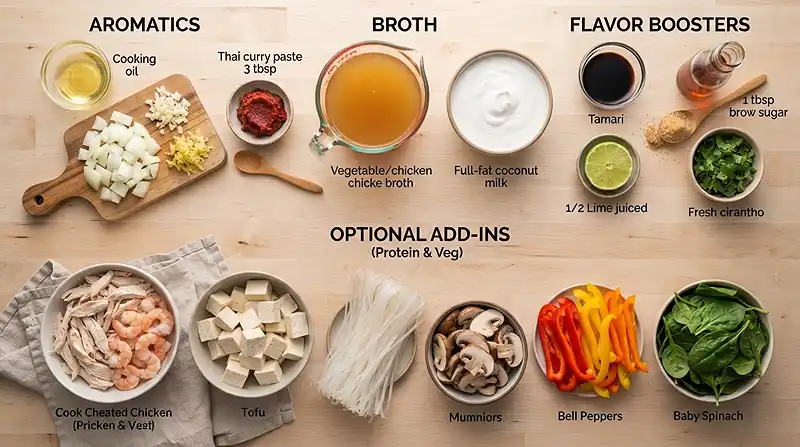
Base Ingredients
| Ingredient | Amount | Notes |
|---|---|---|
| Cooking oil | 1 tablespoon | Avocado or coconut oil work well |
| Small onion, chopped | 1 | Yellow or white onion |
| Garlic, minced | 2 cloves | Fresh is best here |
| Fresh ginger, grated | 1 tablespoon | Freeze the knob for easy grating |
| Certified GF Thai red or yellow curry paste | 2–3 tablespoons | Check labels carefully for wheat starch |
| Vegetable or chicken broth, certified gluten-free | 4 cups | Low-sodium lets you control salt |
| Full-fat coconut milk | 1 (13.5-ounce) can | Full-fat gives the creamiest broth |
| Gluten-free tamari | 1 tablespoon | Not soy sauce—tamari is GF certified |
| Fish sauce | 1 tablespoon | Skip for vegetarian; add extra tamari |
| Brown sugar or maple syrup | 1 tablespoon | Balances the heat and acidity |
| Lime, juiced | 1/2 | Add at the end off the heat |
| Fresh cilantro, chopped | 1/2 cup plus more for garnish | Stir in after removing from heat |
Optional Add-Ins
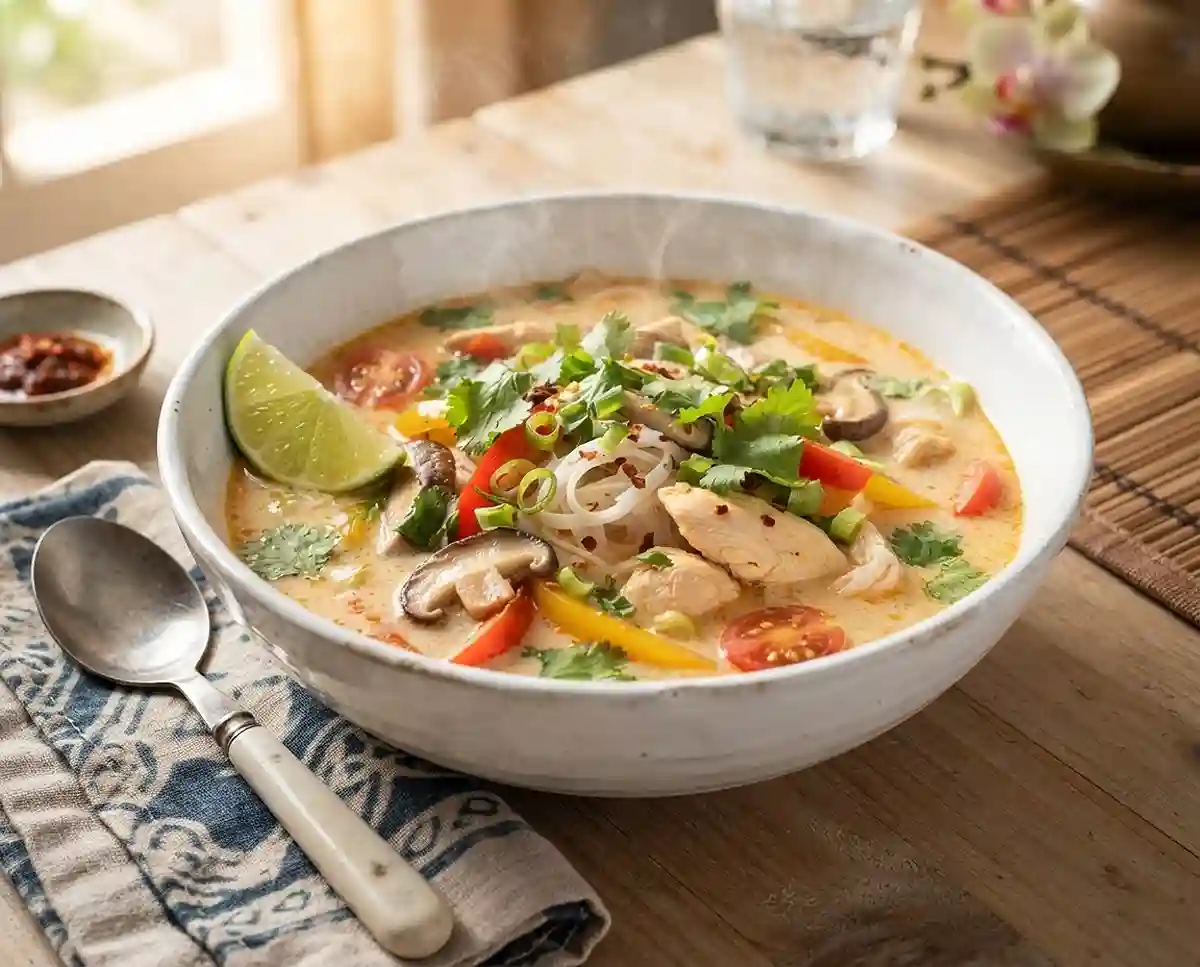
Cooked chicken, shrimp, tofu, rice noodles, mushrooms, bell peppers, or baby spinach. Add these in Step 5 and cook until heated through.
Instructions
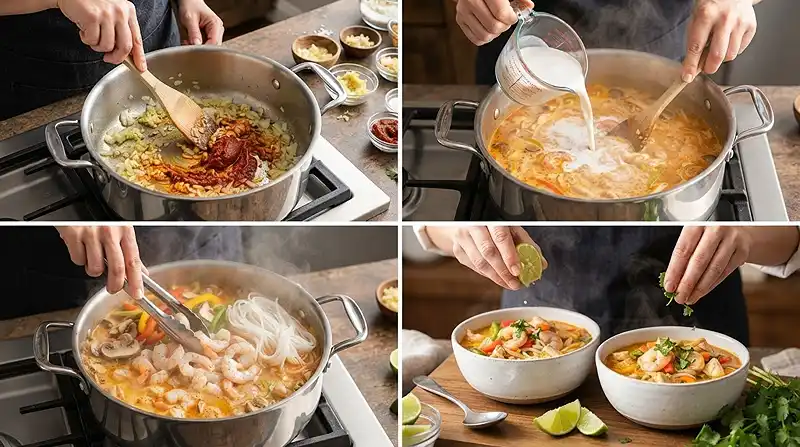
- Sauté the aromatics. Heat the oil in a large soup pot over medium heat. Add the onion, garlic, and ginger and sauté for 2–3 minutes, until softened and fragrant. You’re looking for that golden-edged tenderness and a smell that fills the kitchen.
- Toast the curry paste. Stir in the curry paste and cook for 1 minute, stirring constantly. This blooms the spices in the fat and deepens the flavor of the entire soup. Don’t rush this step—it matters.
- Build the broth. Pour in the broth and coconut milk. Stir in the tamari, fish sauce, and brown sugar or maple syrup. Bring to a gentle boil over medium-high heat, stirring occasionally to blend.
- Simmer. Reduce the heat to low and simmer for 10 minutes, stirring occasionally. The broth will deepen in color and smell warmly of coconut and spice—like a broth that melts like butter on a cold evening.
- Add optional proteins and vegetables. Add any cooked chicken, tofu, rice noodles, or vegetables. Cook until heated through and tender. If using raw shrimp, simmer for a few minutes until pink and opaque throughout.
- Finish off the heat. Remove the pot from the heat. Stir in the lime juice and chopped cilantro. Taste and adjust with additional tamari, lime juice, curry paste, or salt if needed.
- Serve. Ladle into bowls and garnish with fresh cilantro. Serve hot.
Make It Your Own
You know… one of the best things about this soup is how well it adapts to whatever you have on hand. Swap the protein, change the heat level, make it vegan—it handles all of it gracefully.
Make It Vegan
Skip the fish sauce and replace it with an extra tablespoon of gluten-free tamari and a small splash of rice vinegar. This keeps that savory, umami depth without any animal products.
Adjust the Heat
Red curry paste brings more heat; yellow curry paste is milder and slightly sweeter. Start with 2 tablespoons and taste before adding a third—you can always add more spice, but you can’t take it away.
Add Rice Noodles
Cook rice noodles separately according to package directions, then add them to individual bowls before ladling the soup on top. This prevents them from absorbing too much broth and turning mushy when you have leftovers. For more easy gluten-free weeknight dinners, check out this sheet pan maple sausage veggie roast—it’s another one-pan wonder.
Go Low-Carb
Skip the noodles entirely and add riced cauliflower or extra spinach. The coconut milk broth is already low-carb, so it’s a simple swap. This is also a great option for anyone following a grain-free lifestyle who wants something warming and filling.
Bulk It Up for Meal Prep
Double the broth base and store it without the cilantro. Add freshly chopped cilantro when you reheat each portion so it stays vibrant. The gluten-free chili recipe on Grainless Life uses the same make-ahead strategy and is worth having in your rotation.
Common Problems & Solutions
Man, oh man… gluten-free cooking has its quirks, and soups are no exception. Here’s what to do if something goes sideways.
Problem: The Broth Tastes Flat
Solution: Add more lime juice first, then a little tamari. Flat soup usually needs acid or salt—not more curry paste. Taste methodically: add one thing at a time, stir, and taste again before adding anything else.
Problem: The Soup Is Too Spicy
Solution: Stir in an extra splash of coconut milk or a small spoon of maple syrup. Fat and sweetness both dial back heat effectively. A squeeze of extra lime can also help round out an overpowering curry flavor.
Problem: The Broth Is Too Thin
Solution: Simmer uncovered for a few additional minutes to reduce and concentrate. You can also whisk a teaspoon of arrowroot starch into a small amount of cold broth, then stir that slurry into the simmering pot. It thickens beautifully without altering flavor.
Problem: The Cilantro Turned Slimy
Solution: You likely added it while the soup was still on the heat. Always remove the pot from the burner before stirring in the cilantro. This keeps the herb bright green, fresh-tasting, and texture-intact rather than wilted and mushy.
Problem: My Curry Paste Contains Gluten
Solution: Not all Thai curry pastes are gluten-free—wheat starch is a common hidden ingredient. Look for certified gluten-free labels, and review the Beyond Celiac resource on curry and gluten for brand guidance and what to watch for.
Storage & Meal Prep
| Method | Duration | Notes |
|---|---|---|
| Counter | Not recommended | Coconut milk spoils quickly at room temp |
| Fridge | 4–5 days | Store in an airtight container |
| Freezer | 2–3 months | Freeze without noodles; add fresh when reheating |
Reheat gently on the stovetop over medium-low heat, stirring occasionally. Coconut milk can separate if boiled hard—a slow, steady reheat keeps the broth creamy and emulsified.
If you froze a batch, thaw overnight in the fridge before reheating. Stir in a fresh handful of cilantro after reheating for the best flavor. For another freezer-friendly snack, these no-bake pumpkin date energy bites are a great addition to your gluten-free meal prep routine.
Coconut Curry Soup with Cilantro FAQs
Can I make this gluten-free coconut curry soup ahead of time?
Yes. The broth base keeps beautifully in the fridge for up to 5 days. Make it through Step 4, cool completely, and store without the cilantro. Add fresh cilantro and a squeeze of lime when you reheat each serving.
How do I know if my curry paste is gluten-free?
Look for a certified gluten-free label on the package. Some Thai curry pastes contain wheat starch as a thickener or filler. Brands like Maesri and Thai Kitchen have gluten-free options, but always read the label before buying.
Can I use light coconut milk instead of full-fat?
You can, but the broth will be noticeably thinner and less rich. Full-fat coconut milk is what gives this soup its creamy, restaurant-quality texture. If you use light, consider adding an extra tablespoon of coconut cream to compensate.
Why did my broth turn grayish after refrigerating?
That’s normal. Coconut milk solidifies and can slightly discolor when chilled. Reheat the soup slowly over medium-low heat and stir gently—it will come back together into a smooth, creamy broth as it warms.
What’s the best protein to add to this soup?
Shrimp cooks the fastest—just a few minutes until pink and opaque. Cooked rotisserie chicken is the most convenient option. Firm tofu works well for a vegetarian version; press it first so it absorbs the broth rather than diluting it.
Serving Suggestions
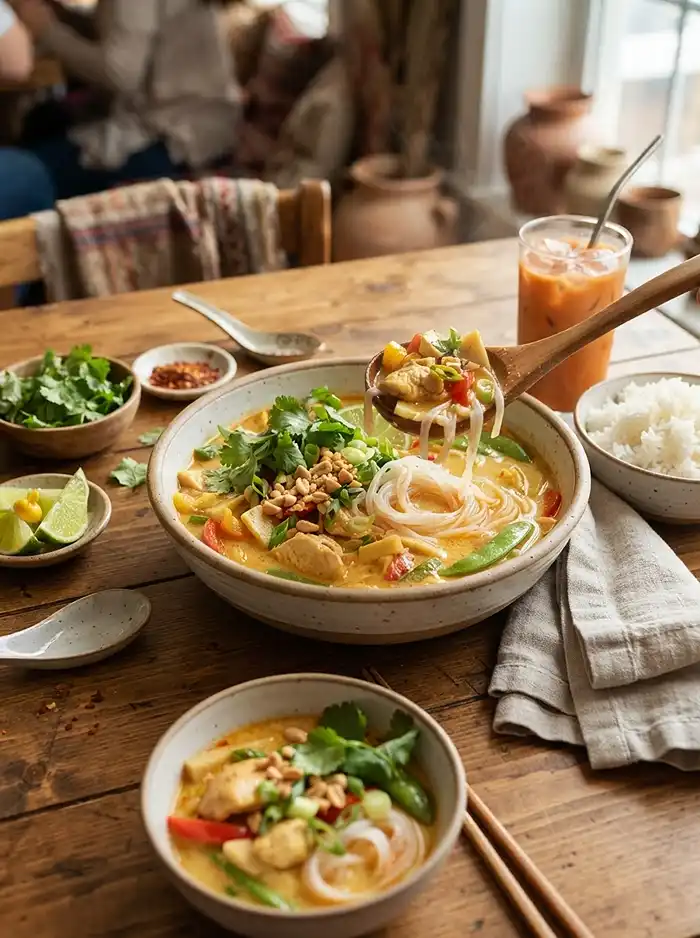
Serve this soup with a side of warm gluten-free flatbread or over a scoop of jasmine rice for a heartier meal. A simple cucumber salad alongside adds cool contrast to the warm, spiced broth.
This soup is a natural fit for Thanksgiving week when you want something comforting that isn’t turkey again—it’s warming, hands-off, and feeds a crowd without fuss. It’s also become my go-to for cozy family Sunday dinners when everyone wants something that feels special but nobody wants to be in the kitchen for hours.
If you enjoy warming one-bowl meals, you’ll also love this hearty gluten-free pepper belly chili—another deeply satisfying option for cold-weather cooking.
Conclusion
This gluten-free coconut curry soup with cilantro has earned a permanent spot in my weekly rotation, and I think it will in yours too. It’s fast, flexible, and genuinely satisfying—not in spite of being gluten-free, but completely regardless of it.
If you give it a try, I’d love to hear what proteins or vegetables you added. Drop a comment below with your version—your creativity might inspire the next person who finds this recipe.
Made it? Rate it and share it on Pinterest so more gluten-free families can find a weeknight soup they’ll actually want to make again.
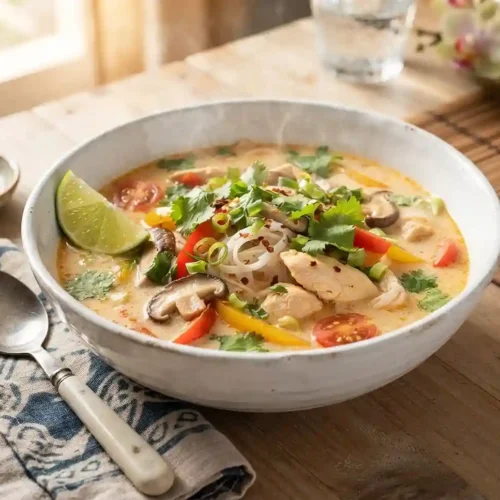
Gluten-Free Coconut Curry Soup with Cilantro
Equipment
- Large soup pot
Ingredients
Base Ingredients
- 1 tablespoon Cooking oil Avocado or coconut oil work well
- 1 Small onion, chopped Yellow or white onion
- 2 cloves Garlic, minced Fresh is best here
- 1 tablespoon Fresh ginger, grated Freeze the knob for easy grating
- 2–3 tablespoons Certified GF Thai red or yellow curry paste Check labels carefully for wheat starch
- 4 cups Vegetable or chicken broth, certified gluten-free Low-sodium lets you control salt
- 1 13.5-ounce can Full-fat coconut milk Full-fat gives the creamiest broth
- 1 tablespoon Gluten-free tamari Not soy sauce—tamari is GF certified
- 1 tablespoon Fish sauce Skip for vegetarian; add extra tamari
- 1 tablespoon Brown sugar or maple syrup Balances the heat and acidity
- ½ Lime, juiced Add at the end off the heat
- ½ cup Fresh cilantro, chopped Plus more for garnish; stir in after removing from heat
Optional Add-Ins
- Cooked chicken, shrimp, tofu, rice noodles, mushrooms, bell peppers, or baby spinach Add in Step 5 and cook until heated through and tender; raw shrimp should be cooked until pink and opaque
Instructions
- Sauté the aromatics. Heat the oil in a large soup pot over medium heat. Add the onion, garlic, and ginger and sauté for 2–3 minutes, until softened and fragrant.
- Toast the curry paste. Stir in the curry paste and cook for 1 minute, stirring constantly, to bloom the spices and deepen the flavor.
- Build the broth. Pour in the broth and coconut milk. Stir in the tamari, fish sauce, and brown sugar or maple syrup. Bring to a gentle boil over medium-high heat, stirring occasionally.
- Simmer. Reduce the heat to low and simmer for 10 minutes, stirring occasionally.
- Add optional proteins and vegetables. Add any cooked chicken, tofu, rice noodles, or vegetables. Cook until heated through and tender. If using raw shrimp, simmer for a few minutes until pink and opaque throughout.
- Finish off the heat. Remove the pot from the heat. Stir in the lime juice and chopped cilantro. Taste and adjust with additional tamari, lime juice, curry paste, or salt if needed.
- Serve. Ladle into bowls and garnish with fresh cilantro. Serve hot.