3 Ingredient Banana Bread Without Flour Or Oats
Make gluten-free banana bread with just 3 ingredients and no flour or oats. Simple steps, wholesome results, and ready in under an hour.
The first time I made gluten-free 3 ingredient banana bread without flour or oats, I honestly wasn’t expecting much. Three ingredients, no fancy flours, no gums — it sounded too stripped-down to actually work.
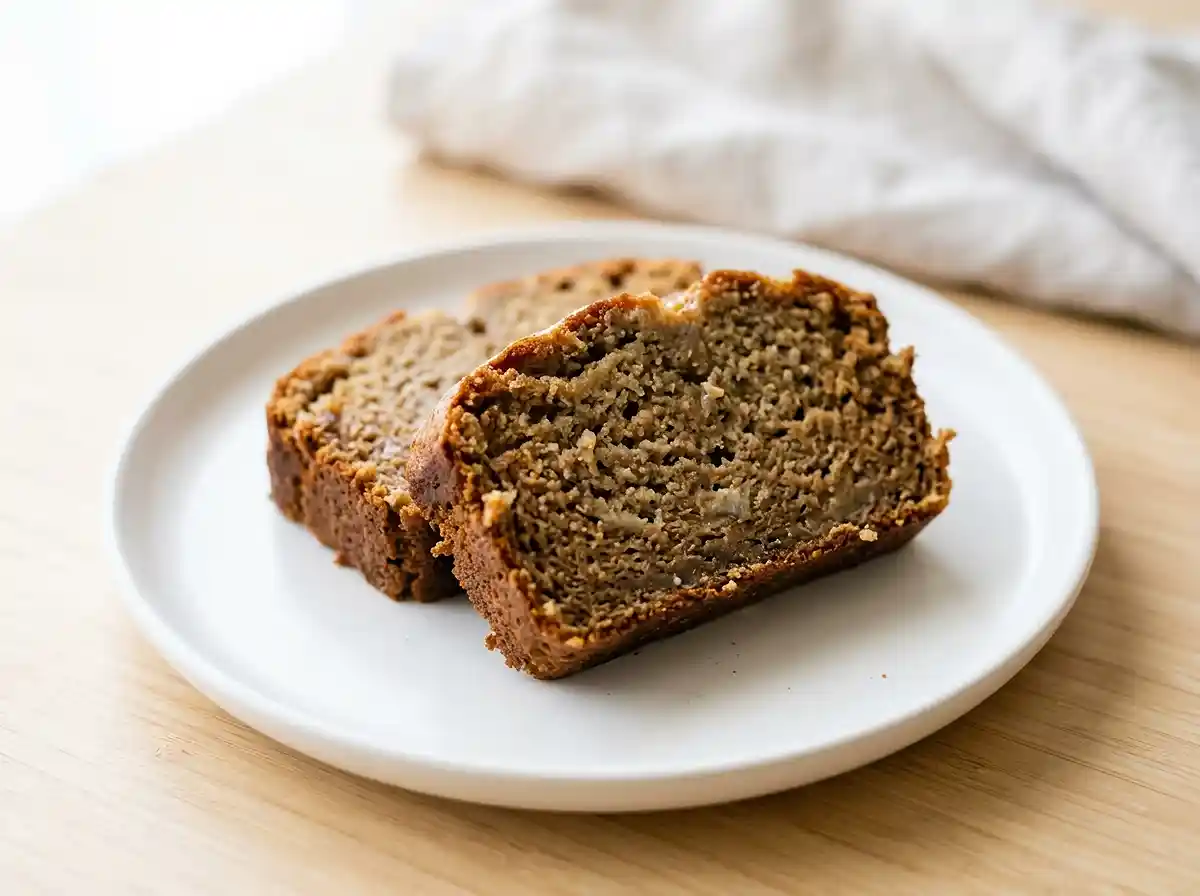
But when I pulled that loaf out of the oven and sliced into it, the inside was dense in the best possible way — almost like a cross between banana bread and a protein-packed brownie. My kids devoured half the loaf before it even finished cooling.
Well… I’ve been making it on repeat ever since. What makes this recipe so special isn’t just the simplicity — it’s that it works for so many different diets, kitchens, and skill levels without compromising on flavor.
Table of Contents
Why You’ll Love This 3-Ingredient Banana Bread
- Naturally gluten-free and grain-free: No flour, no oats, no starches. Just bananas, eggs, and nut butter doing all the heavy lifting.
- Beginner-friendly: One bowl, no mixer needed, and less than 10 minutes of prep time before it goes into the oven.
- High in protein and healthy fats: Thanks to the eggs and peanut butter (or almond butter), each slice keeps you full longer than traditional banana bread.
- Infinitely customizable: Works beautifully as a base — add chocolate chips, spices, or a swirl of honey depending on your mood.
The Secret to Perfect Gluten-Free 3 Ingredient Banana Bread Without Flour or Oats
Most people think gluten-free baking is complicated. This recipe proves it doesn’t have to be — but there are a few key techniques that make all the difference.
- Use very ripe bananas: The riper the banana, the sweeter and moister your loaf will be. Bananas with black-spotted peels have more natural sugars and mash to a smoother consistency, which helps the batter bind properly.
- Whisk the eggs thoroughly: Eggs do triple duty here — they bind, they lift, and they add protein. Whisking them well before combining ensures a uniform batter without streaks or separation.
- Use natural nut butter, not commercial: Natural peanut butter or almond butter (the kind where oil separates at the top) blends more smoothly and doesn’t contain added sugars or stabilizers that can affect texture. According to research shared by the Harvard T.H. Chan School of Public Health nutrition resource, bananas are a rich source of potassium and resistant starch — making them more than just a sweetener in this recipe.
- Don’t skip the cooling step: Gluten-free breads set as they cool. Slicing too early leads to a gummy, underdone-looking crumb — even if it’s fully baked. Full cooling on a wire rack gives you clean slices.
Ingredients
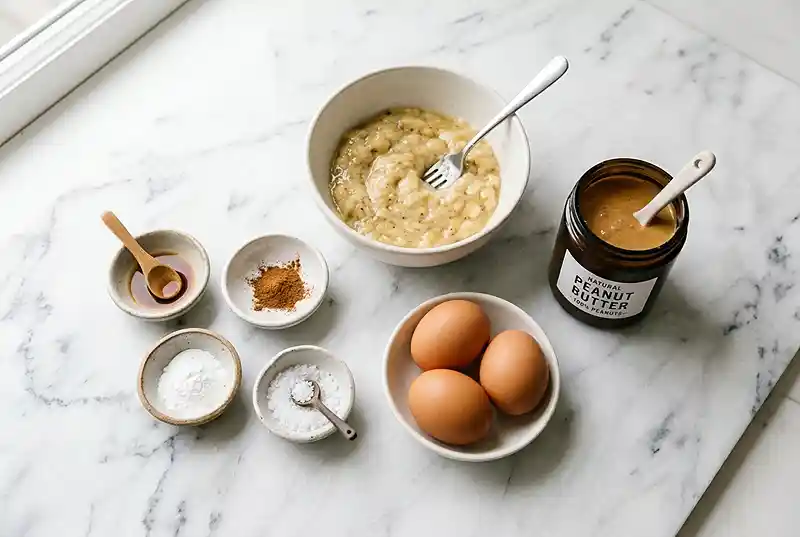
This recipe makes 8 slices. Keep the quantities exactly as listed for best results.
| Category | Ingredient | Amount | Notes |
|---|---|---|---|
| Base | Large ripe bananas, mashed | 3 | The riper the better — black-spotted peels are ideal |
| Base | Large eggs | 3 | Room temperature works best |
| Base | Natural peanut butter or almond butter | ½ cup | No added sugar or palm oil varieties |
| Optional | Vanilla extract | 1 tsp | Rounds out the flavor significantly |
| Optional | Ground cinnamon | 1 tsp | Adds warmth — great for fall baking |
| Optional | Baking powder | ½ tsp | Gives a slightly lighter, airier texture |
| Optional | Salt | Pinch | Balances sweetness |
Instructions
- Preheat the oven to 350°F (175°C). Grease or line a 7×3-inch loaf pan with parchment paper. Using parchment paper makes for easy removal with no sticking — leave enough overhang on the sides to lift the loaf cleanly.
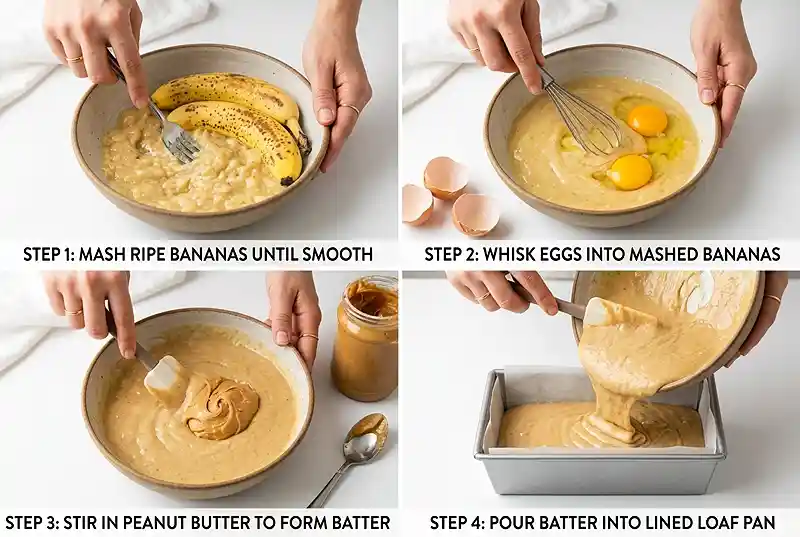
- Mash the bananas. In a large bowl, mash the 3 large ripe bananas until smooth. A few small lumps are fine, but aim for a mostly uniform paste so the batter blends evenly. The mixture should smell naturally sweet and fragrant.
- Whisk in the eggs. Add the 3 large eggs to the mashed banana and whisk until fully combined. You’re looking for a slightly frothy, uniform mixture with no visible streaks of egg white or yolk.
- Stir in the nut butter. Add the ½ cup of natural peanut butter or almond butter and stir until the batter is smooth and uniform. It will thicken noticeably at this stage — that’s expected. Fold gently rather than beating aggressively to keep the batter airy.
- Add the optional ingredients (if using). Mix in the 1 tsp vanilla extract, 1 tsp ground cinnamon, ½ tsp baking powder, and pinch of salt. Stir just until incorporated. Over-mixing at this stage isn’t a concern since there’s no gluten to develop, but a light hand keeps the texture consistent.
- Pour and smooth. Pour the batter into the prepared loaf pan and use a spatula to smooth the top into an even layer. The batter will be thicker than traditional banana bread — don’t worry if it doesn’t pour like liquid.
- Bake for 35–45 minutes. The loaf is done when the top is golden and a toothpick inserted into the center comes out clean. Start checking at the 35-minute mark. The edges will pull slightly away from the pan and smell deeply of roasted banana and nut butter.
- Cool before slicing. Let the banana bread cool in the pan for 10 minutes, then transfer to a wire rack to cool completely before slicing. This is the hardest part — but it’s essential for clean slices and a set crumb.
Make It Your Own
Switching between peanut butter and almond butter is the easiest swap. Peanut butter gives a bolder, nuttier flavor while almond butter produces a milder, slightly sweeter loaf. Both work equally well as binders — just make sure you’re using the natural variety either way.
You know… if you have a nut allergy in the house, sunflower seed butter is a solid alternative. It has a similar fat content and texture to natural nut butters, and it binds the batter just as effectively. The color may look slightly greenish when baked (a reaction with baking powder), but the taste is great.
For a dairy-free chocolate version, fold in ¼ cup of dairy-free chocolate chips right before pouring into the pan. The chips melt into the loaf as it bakes, creating pockets of richness that make each slice feel genuinely indulgent. This is especially popular for holiday brunch spreads — it goes fast on Christmas morning.
Want to explore other flour-free banana recipes? My gluten-free oat flour banana bread uses a slightly different approach for those who want a heartier crumb with more chew. It’s a great comparison to see how different base ingredients change the final texture.
Common Problems & Solutions
Problem: The center is gummy even after the recommended bake time.
Tent the loaf loosely with foil and bake for an additional 5–10 minutes. Gumminess usually comes from underbaking or using very large, extra-wet bananas. A toothpick in the very center — not just the edge — should come out completely clean before you pull the loaf.
Problem: The bread didn’t rise much and looks flat.
This is normal for a flourless loaf — it won’t rise like traditional banana bread. Adding the optional ½ tsp of baking powder makes a noticeable difference in lift. Without it, the loaf is denser but still fully cooked and enjoyable.
Problem: The loaf is sticking to the pan even with greasing.
Switch to parchment paper with overhang rather than greasing alone. Grain-free batters tend to be stickier than flour-based ones, and parchment eliminates the sticking problem entirely. Line the pan before you start mixing the batter.
Man, oh man… the crumbling issue is one I hear about constantly. If your slices are falling apart, the bread almost certainly wasn’t cooled long enough. This loaf needs to reach room temperature before slicing — the proteins from the eggs continue to set as the bread cools, which is what holds everything together.
For a deeper dive into what makes gluten-free baking behave differently at a structural level, the Celiac Disease Foundation’s gluten-free food resource offers a helpful overview of how binding agents function without gluten — useful reading if you want to experiment further with other grain-free recipes.
Storage & Meal Prep
| Method | Duration | Notes |
|---|---|---|
| Counter | 2–3 days | Airtight container, away from direct sunlight |
| Fridge | 5–7 days | Bring to room temperature before eating for best texture |
| Freezer | 2–3 months | Wrap individual slices tightly, thaw at room temp overnight |
To reheat from the fridge, let a slice sit at room temperature for 15 minutes or warm it in the microwave for 20–25 seconds. Freezer slices reheat beautifully — wrap each one in plastic wrap, then foil, before freezing to prevent freezer burn.
This loaf is a great make-ahead option for busy weekday mornings. Bake it Sunday evening and you’ve got grab-and-go breakfast for the entire week. Pair a slice with a hard-boiled egg or some Greek yogurt for a balanced, protein-forward start.
Your Questions Answered
How do you make 3 ingredient banana bread without flour or oats?
Mash 3 ripe bananas, whisk in 3 eggs, and stir in half a cup of natural peanut or almond butter until smooth, then bake at 350°F for 35 to 45 minutes. The bananas provide natural sweetness and moisture, the eggs bind and lift, and the nut butter adds structure without any flour or oats needed.
What can I use instead of flour in banana bread?
Nut butter is the most effective flour substitute for a truly grain-free banana bread. It provides fat, protein, and body without any grain-based starches. Other options include almond flour, coconut flour, or oat flour, though these will change the texture and calorie content of the finished loaf.
Why did my banana bread turn out gummy in the middle?
A gummy center almost always means the bread needed more time in the oven. Insert a toothpick into the very center and if it comes out wet, bake for another 5 to 10 minutes tented with foil. Very ripe or extra-large bananas add more moisture and may require the full 45-minute bake time.
Can I make this recipe with almond butter instead of peanut butter?
Yes, almond butter works perfectly as a one-to-one swap. The result is a slightly milder flavor with the same moist texture. Avoid sweetened or commercial nut butters with added oils, as these can make the batter too oily and affect how the loaf sets.
How do I store gluten-free banana bread to keep it fresh?
Store in an airtight container at room temperature for up to 3 days, or refrigerate for up to 7 days. For longer storage, wrap individual slices and freeze for up to 3 months. Always let refrigerated or frozen slices return to room temperature before eating for the best texture.
Serving Suggestions For Healthy Banana Bread
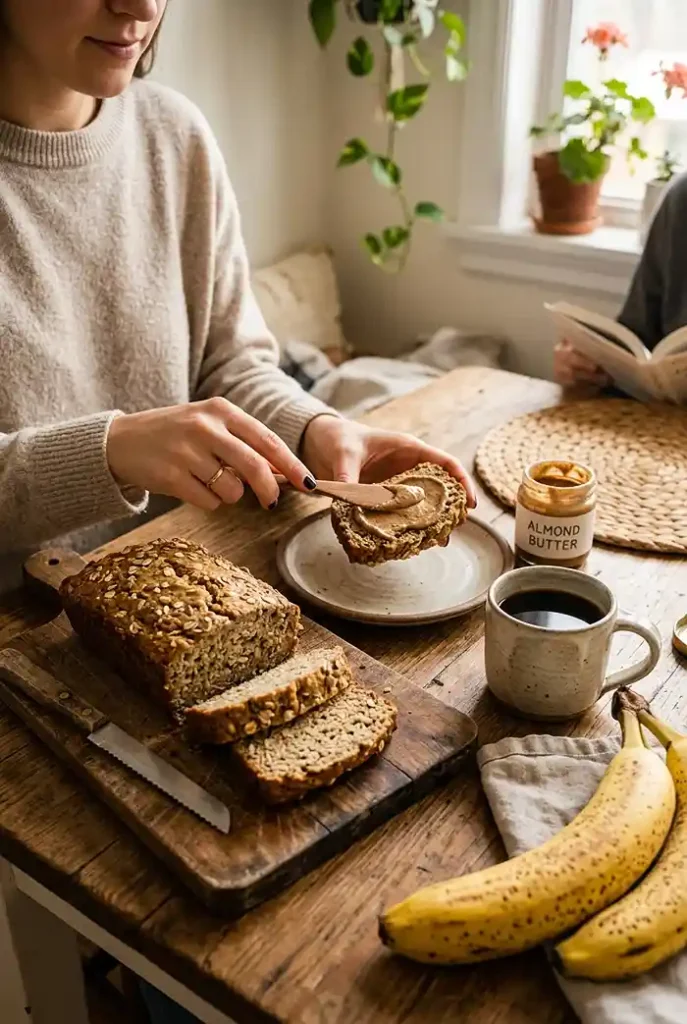
A slice of this banana bread pairs beautifully with a smear of almond butter, a drizzle of raw honey, or a handful of fresh berries on the side. For a heartier breakfast plate, serve alongside a simple green smoothie or a bowl of Greek yogurt topped with granola.
It’s also a crowd-pleaser at Easter brunch — set out a sliced loaf alongside my lemon berry frozen cheesecake squares for a light, naturally gluten-free dessert spread that covers everyone at the table. And if you’re building a bigger meal around it, my gluten-free chicken parmesan skillet makes a satisfying main dish that keeps the entire menu grain-free without any effort.
If you try this recipe, leave a comment below and let me know how it turned out for you — especially if you tried a fun variation like chocolate chips or a different nut butter. Sharing it on Pinterest helps other gluten-free families find it too, and I always love seeing your kitchen results. Happy baking!
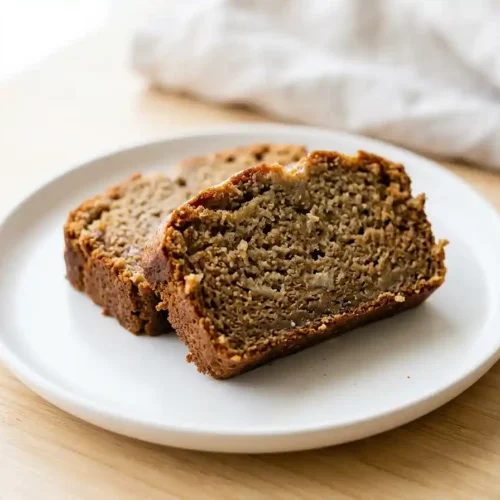
3-Ingredient Banana Bread Without Flour — Easy & Gluten-Free
Equipment
- Large mixing bowl
- Whisk
- Spatula
- 7×3-inch loaf pan
- Parchment paper
- Wire cooling rack
- Oven
Ingredients
Base
- 3 Large ripe bananas, mashed The riper the better; black-spotted peels are ideal
- 3 Large eggs Room temperature
- ½ cup Natural peanut butter or almond butter No added sugar or palm oil
Optional
- 1 tsp Vanilla extract Optional
- 1 tsp Ground cinnamon Optional
- ½ tsp Baking powder Optional
- 1 pinch Salt Optional
Instructions
- Preheat the oven to 350°F (175°C). Grease or line a 7×3-inch loaf pan with parchment paper.
- Mash the ripe bananas in a large bowl until mostly smooth.
- Add the eggs and whisk until the mixture is smooth and fully combined.
- Stir in the natural peanut butter or almond butter until the batter is smooth and evenly mixed.
- If using, stir in the vanilla extract, cinnamon, baking powder, and salt until incorporated.
- Pour the batter into the prepared loaf pan and smooth the top with a spatula.
- Bake for 35–45 minutes, or until the top is golden and a toothpick inserted into the center comes out clean.
- Cool in the pan for 10 minutes, then transfer to a wire rack and cool completely before slicing.