Gluten-Free Pasta Salad Bento Boxes
Pack a gluten-free pasta salad bento boxes with colorful veggies, cheddar, and a tangy dressing. Step-by-step recipe, make-ahead tips, and kid-friendly variations included.
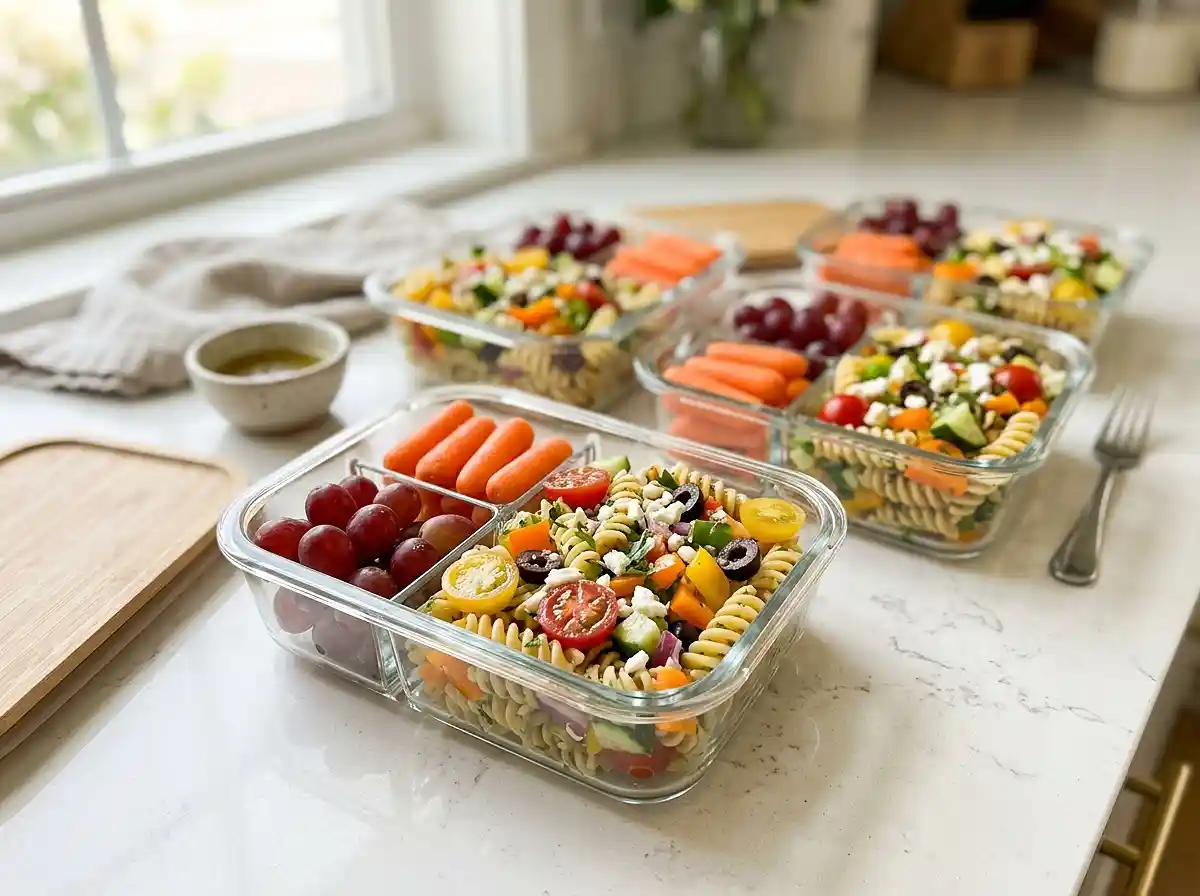
The Sunday I finally cracked our lunch routine was the Sunday I stopped trying to make something different every day. I prepped one big batch of gluten-free pasta salad bento boxes, divided everything into four compartments, and every single kid in the house actually ate their lunch that week without a single complaint.
That’s the quiet power of this recipe. It’s colorful, cold, completely customizable, and holds up beautifully in the refrigerator for days. No reheating, no last-minute scrambling, no sad desk lunches.
Well… if you’ve been circling the meal prep idea but never quite committed, this is the recipe that makes it stick. What’s the real barrier between a good bento and a forgotten one? Almost always, it’s pasta that turned to mush overnight — and that’s exactly the problem this method solves from the start.
Table of Contents
Why You’ll Love This Gluten-Free Pasta Salad Bento
- Holds its texture overnight and beyond. Rinsing the cooked pasta with cold water stops the cooking immediately and keeps each rotini spiral firm and separate — no gluey clumps, no blown-out noodles by day two.
- Ready in under 30 minutes with zero cooking complexity. Boil pasta, chop vegetables, whisk a four-ingredient dressing, toss, and divide. The bento box does the rest of the organizational work for you.
- Kid-friendly and genuinely lunch-box approved. Bright cherry tomatoes, crunchy cucumber, mild cheddar, and familiar grapes in a side compartment make this one of the most consistently eaten cold lunches for kids I’ve ever put together.
- Naturally adaptable for any dietary need. Swap the cheddar for a dairy-free alternative, skip the olives for picky eaters, or build a vegan version with white beans instead — the base is forgiving enough to handle all of it.
The Secret to Perfect Gluten-Free Pasta Salad Bento Boxes
- Rinse the pasta with cold water immediately after draining. Gluten-free pasta — especially rice-based or corn-based varieties — continues cooking from residual heat after it leaves the pot. A cold rinse arrests that process and sets the texture before it can go soft. This is the single most important step for a pasta salad that still tastes good two days later.
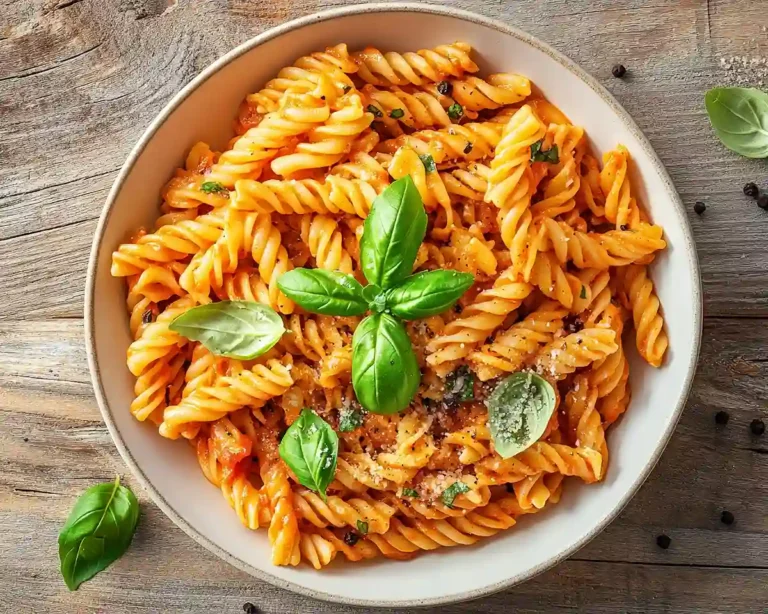
- Use rotini, not penne or spaghetti. The spiral shape traps dressing in every groove, which means every forkful carries flavor. Flat or tubular shapes pool dressing at the bottom of the container and leave the pasta tasting under-seasoned.
- Dress the pasta while it’s still slightly warm. A warm pasta surface absorbs dressing more readily than cold pasta. If you wait until everything is fridge-cold to toss in the dressing, the flavor sits on top rather than penetrating the pasta.
- Cut vegetables to a consistent size. Diced cucumber and bell pepper that match the size of the pasta pieces give you a better distribution in every bite. Overly large chunks sink to the bottom; uniformly small pieces stay evenly mixed. According to food science guidance on pasta salad technique, uniform cutting also speeds marinating by maximizing surface contact with the dressing.
Ingredients
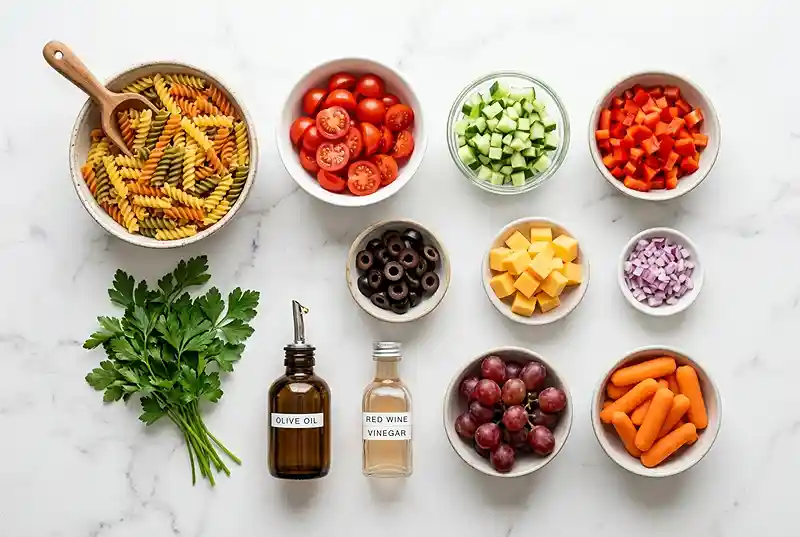
| Category | Ingredient | Amount | Notes |
|---|---|---|---|
| Pasta | Gluten-free rotini pasta | 12 oz (340 g) | Rice, corn, or chickpea-based all work; cook al dente |
| Vegetables | Cherry tomatoes, halved | 1 cup | |
| Vegetables | Cucumber, diced | 1 cucumber | |
| Vegetables | Red bell pepper, diced | 1 red bell pepper | |
| Vegetables | Sliced black olives | ½ cup | |
| Protein/Dairy | Cubed cheddar cheese | ½ cup | Swap for dairy-free cheddar if needed |
| Aromatics | Red onion, finely diced | ¼ cup | Soak in cold water for 10 min to mellow the sharpness |
| Herbs | Fresh parsley, chopped | 2 tbsp |
Dressing ingredients (whisk together): olive oil, red wine vinegar, Dijon mustard, Italian seasoning, salt, and pepper — adjust to taste.
Bento compartment additions: grapes and baby carrots for the side compartments.
Instructions
Cook and Cool the Pasta
- Cook the pasta al dente. Bring a well-salted pot of water to a full boil and cook the 12 oz gluten-free rotini according to package directions. Pull it 1 minute early if you can — it will continue softening slightly as it cools.
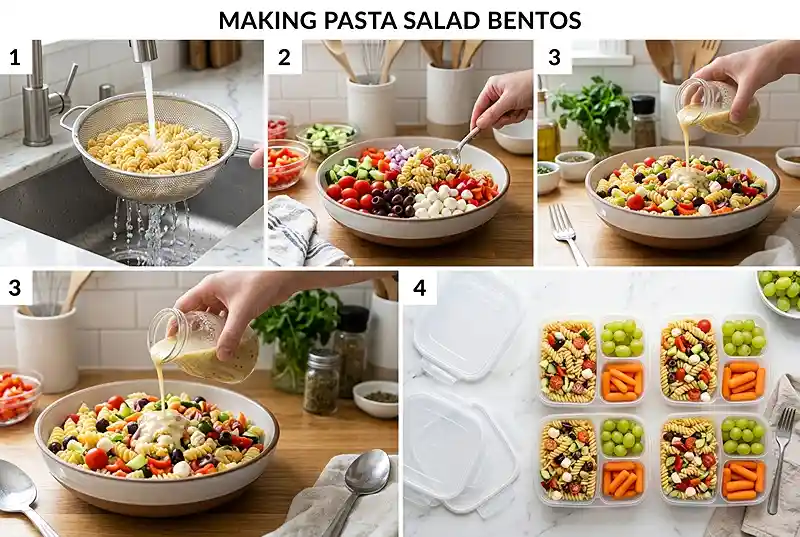
- Drain and rinse immediately. Drain the pasta and rinse it under cold running water for 30 to 60 seconds, tossing it as you go. You’ll feel it go from sticky and clumping to separate and firm — that’s exactly what you want. Let it drain fully in the colander.
Build the Pasta Salad
- Combine the pasta and vegetables. In a large bowl, add the cooled pasta along with the halved cherry tomatoes, diced cucumber, diced red bell pepper, sliced black olives, cubed cheddar cheese, finely diced red onion, and chopped fresh parsley. Toss gently to distribute everything evenly.
- Make the dressing. In a small bowl, whisk together the olive oil, red wine vinegar, Dijon mustard, Italian seasoning, salt, and pepper until fully emulsified. A well-whisked dressing coats every ingredient rather than pooling at the bottom of the bowl.
- Dress and toss. Pour the dressing over the pasta salad and toss well to coat. The dressing will look like a lot at first — keep tossing until it’s fully absorbed and there’s no puddle at the bottom of the bowl.
Pro Tip: Taste the salad before packing. Gluten-free pasta absorbs dressing aggressively as it sits — if you’re making this the night before, add an extra splash of olive oil and a pinch of salt at pack time to refresh the flavor.
Pack the Bento Boxes
- Divide the pasta salad. Scoop the pasta salad evenly into 4 bento-style containers, filling the main compartment.
- Fill the side compartments. Add grapes and baby carrots to separate compartments in each bento box. Both hold up well refrigerated and give kids something sweet and crunchy alongside the savory main.
- Refrigerate until ready to serve. Seal the containers and refrigerate. These are best eaten cold straight from the fridge — no reheating needed or recommended.
Make It Your Own
You know… what I love most about this school lunch pasta salad format is how many directions it can go without breaking the basic structure. The rotini-plus-dressing base is genuinely neutral enough to handle bold swaps.
Make it dairy-free by swapping the cheddar. A cubed dairy-free cheddar-style block holds its shape in the salad just as well as regular cheddar. Avoid shredded dairy-free cheese — it tends to dissolve into the dressing and disappear. Cubes are the move for both texture and visual contrast in the bento.
Add protein to make it a full meal. Diced grilled chicken, canned chickpeas, or sliced salami turn this cold lunch for kids into something with enough staying power to carry them through an afternoon. Chickpeas are particularly good here — they absorb the Italian dressing beautifully and add a hearty bite.
Try a different pasta shape for a new texture. Gluten-free fusilli or farfalle (bowties) work just as well as rotini if that’s what you have on hand. Avoid rice vermicelli or thin spaghetti-style noodles — they don’t hold up in the dressing the same way and tend to clump in the box.
Swap Italian dressing for a Caesar or lemon-herb version. A simple lemon-olive oil dressing with fresh garlic and herbs gives this a Mediterranean character that pairs especially well if you add Kalamata olives and sun-dried tomatoes instead of the standard mix-ins.
Common Problems & Solutions
Man, oh man — gluten-free pasta salad has a reputation for going wrong fast, but every single problem has a straightforward fix.
Problem: The pasta turned mushy overnight.
Solution: Pull the pasta from the boiling water 1 minute early and rinse immediately under cold water. Gluten-free pasta overcooks faster than wheat pasta because it lacks the gluten network that keeps wheat noodles structurally intact. According to gluten-free pasta nutrition and cooking guidance, most gluten-free varieties reach optimal texture at the lower end of their suggested cook time.
Problem: The salad tastes bland after a night in the fridge.
Solution: Gluten-free pasta absorbs dressing as it sits — this is predictable, not a failure. Make a slightly larger batch of dressing than you think you need, and add a refresh drizzle of olive oil and a pinch of salt right before packing or serving. The fresh parsley also fades in the fridge, so add a few extra leaves when serving.
Problem: The pasta is clumping in the container.
Solution: Make sure the pasta is fully coated in dressing before packing. If any pasta goes into the container without dressing contact, it will stick to itself as it cools. Toss thoroughly — and if you’re still seeing clumping, add a small drizzle of olive oil directly to the pasta before tossing in the dressing.
Problem: The red onion is too sharp for kids.
Solution: Soak the finely diced red onion in cold water for 10 minutes before adding it to the salad. This draws out the sulfur compounds responsible for that sharp, eye-watering bite and leaves behind a milder, sweeter onion flavor that most kids won’t object to.
Storage & Meal Prep
| Method | Duration | Notes |
|---|---|---|
| Counter | Not recommended | Dairy and dressed pasta should stay refrigerated |
| Fridge | 3–4 days | Keep sealed; refresh with olive oil and salt before serving |
| Freezer | Not recommended | Dressed pasta does not freeze and thaw well; texture breaks down |
This is a genuine Sunday prep win — make one full batch, pack all four boxes, and school or work lunches are handled for the week with no additional effort.
If you want even more flexibility, store the pasta salad undressed in one container and keep the dressing in a small jar. Toss to coat each morning at pack time — this extends the salad’s freshness to 5 days and keeps the vegetables crisp.
No-waste tip: leftover pasta salad with slightly softened vegetables is fantastic stirred into a warm pan with a splash of olive oil as a quick weeknight side. The dressing doubles as a sauce and the whole thing comes together in under 5 minutes.
Your Questions Answered
Can I make gluten-free pasta salad bento boxes the night before?
Yes, and they are actually better the next day. The pasta absorbs the dressing overnight and the flavors meld together. Add a drizzle of olive oil and check seasoning in the morning before sealing the boxes.
How do I keep gluten-free pasta from getting mushy in a cold salad?
Cook the pasta al dente and rinse it immediately with cold water after draining. Rinsing stops the cooking process fast and sets the noodles at a texture that holds up in the fridge. Undercooking by one minute also gives the pasta room to soften in the dressing without going past the right texture.
What is the best gluten-free pasta shape for pasta salad?
Rotini is the top choice because the spiral shape holds dressing in every groove. Fusilli works equally well. Avoid thin rice noodles or long pasta shapes, which tend to tangle, clump, and do not distribute evenly through the other ingredients.
Can I make this pasta salad dairy-free?
Yes. Swap the cheddar for cubed dairy-free cheddar, white beans, chickpeas, or diced avocado. If using avocado, pack it separately and add it at serving time to prevent browning. All other ingredients in the recipe are naturally dairy-free.
Why does my pasta salad taste dry after sitting in the fridge?
Gluten-free pasta absorbs dressing faster than wheat pasta because of its starch structure. Make slightly more dressing than you think you need, or reserve a small amount to toss in before serving. A fresh drizzle of olive oil also restores the right coating quickly.
Serving Suggestions
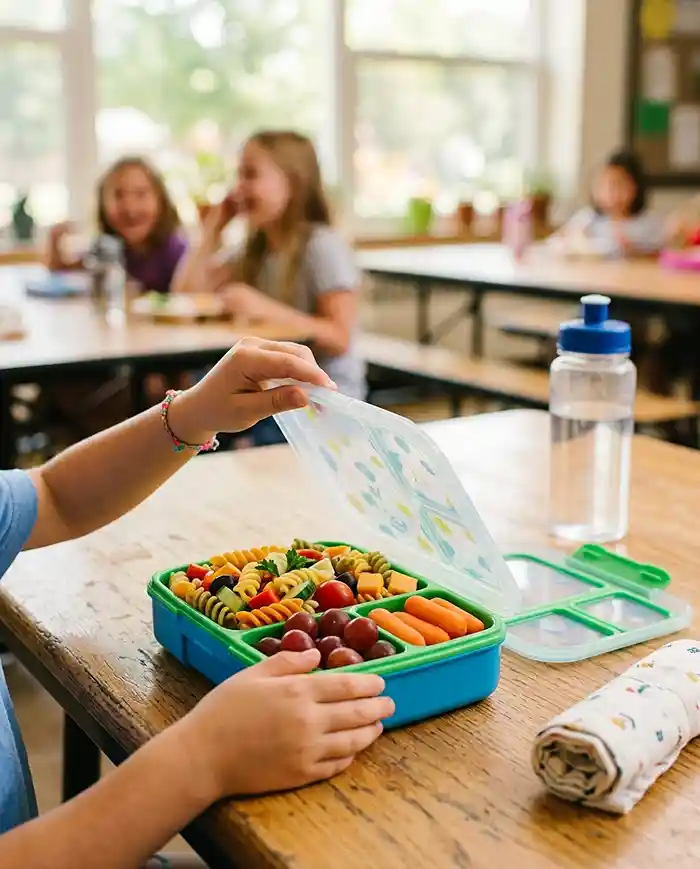
These boxes pack just as well for adult lunches as they do for kids — bring one to work and you’ll have something worth looking forward to. For a Fourth of July cookout or Labor Day picnic spread, double the batch and serve the pasta salad family-style from a large bowl with the bento compartment additions arranged around it.
For more packable gluten-free lunch ideas, this pairs naturally alongside these gluten-free apple nacho snack boxes — a sweet complement to the savory bento — or check out these hearty gluten-free peanut chicken noodle bowls for a warm lunch option on cold days.
If you want a heartier protein-forward pairing for dinner, these gluten-free BBQ lentil sloppy joe bowls use a similar build-ahead approach and round out a full week of easy gluten-free meals.
Try this recipe once and let me know in the comments how your family responded — did the kids actually eat it? Did you swap anything out? And if it earned a place in your weekly rotation, sharing it on Pinterest helps other gluten-free families find it too.