How to Make Homemade Mayonnaise
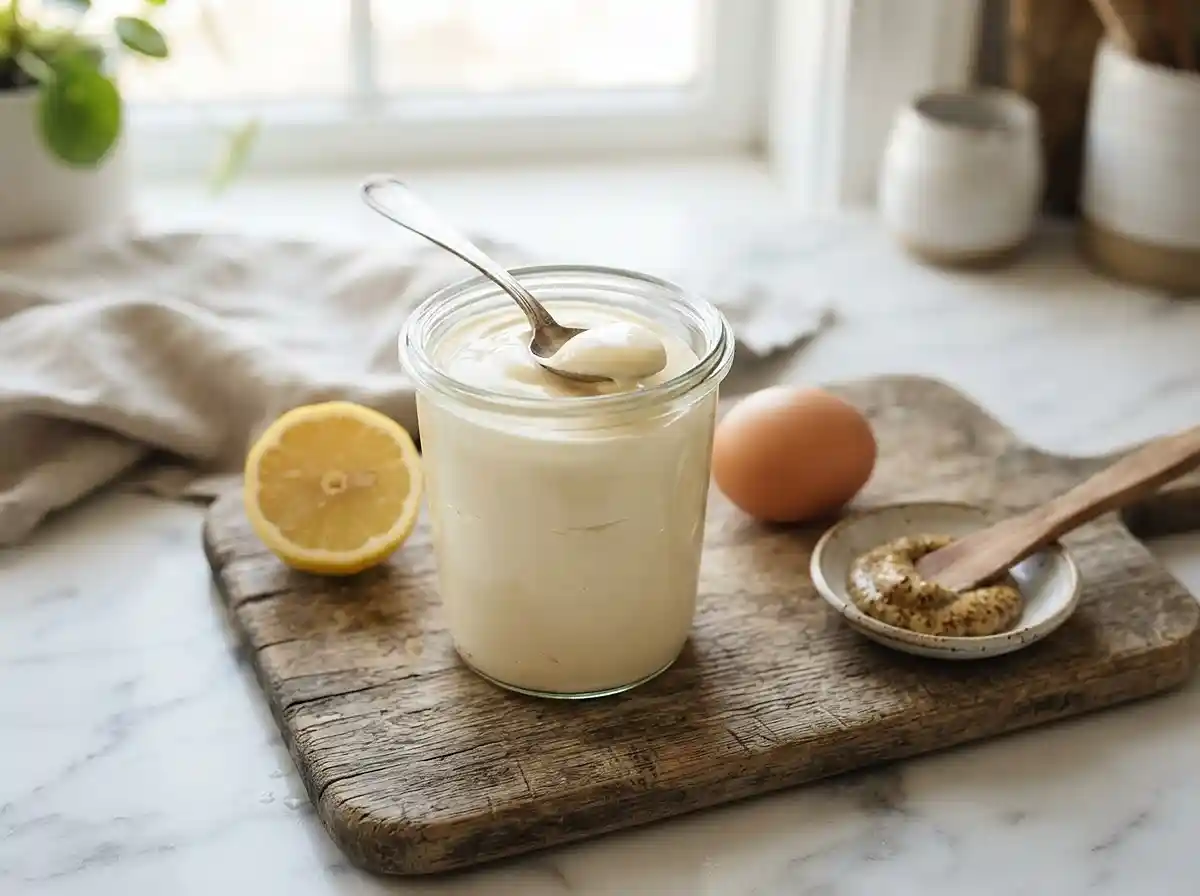
Learn how to make homemade mayonnaise with 5 ingredients in 5 minutes. Get the foolproof immersion blender method, storage tips, and fixes for broken mayo.
The first time I tried making homemade mayonnaise, I ended up with a thin, watery mess that never came together. I was so sure I’d bought a bad jar of oil.
Turns out I just didn’t understand emulsification, and man, oh man, did that lesson stick with me. Once I learned the immersion blender trick, everything changed.
Now I make how to make homemade mayonnaise almost every week for my family, and it takes less time than unloading the dishwasher. You know, there’s something deeply satisfying about turning one egg and a cup of oil into something so creamy and rich.
Well, are you ready to never buy store-bought mayo again?
Table of Contents
Why You’ll Love This Homemade Mayonnaise
- Silky, rich texture that store-bought jars can’t match, with a fresh lemon brightness in every bite
- Beginner-friendly difficulty level, done in one jar with zero fancy equipment beyond an immersion blender
- Naturally gluten-free and free from the stabilizers and gums found in many commercial brands
- Works best for sandwiches, potato salad, deviled eggs, or as a base for aioli and dressings
The Secret to Perfect How to Make Homemade Mayonnaise
This recipe works because of one simple principle: emulsification. When you blend egg yolk, lemon juice, and oil the right way, the egg’s lecithin binds the oil and liquid into a stable, creamy mixture instead of letting them separate.
- Keeping the blender head still at the bottom of the jar for the first 15 seconds forces a slow, controlled emulsion instead of a broken one
- Using room-temperature eggs helps the proteins bind to the oil more evenly, which matters more than people expect
- Adding oil in one pour, not a slow drizzle, is only possible because the immersion blender method builds the emulsion from the bottom up
- Dijon mustard acts as a secondary emulsifier, giving you a safety net if your egg’s natural binding power is a little weak
Ingredients
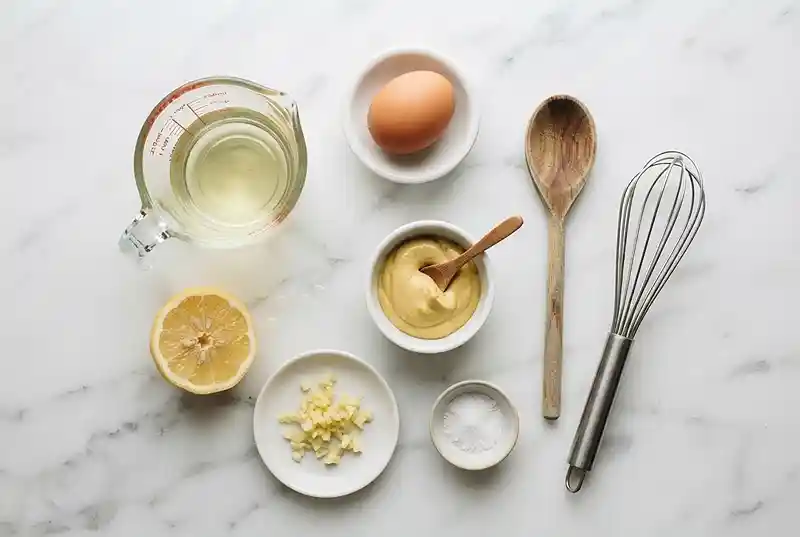
This recipe makes about 1 cup of mayonnaise, roughly 8 servings.
- 1 large egg
- 1 tablespoon (15 ml) lemon juice, from about 1/2 a lemon
- 1 teaspoon Dijon mustard
- 1 medium clove garlic, minced (optional)
- 1 cup (240 ml) vegetable or canola oil
- Kosher salt, to taste
Note: use a fresh, high-quality egg since it’s the only ingredient that doesn’t get cooked. If you’re nervous about raw eggs, look for pasteurized eggs at your grocery store.
Instructions
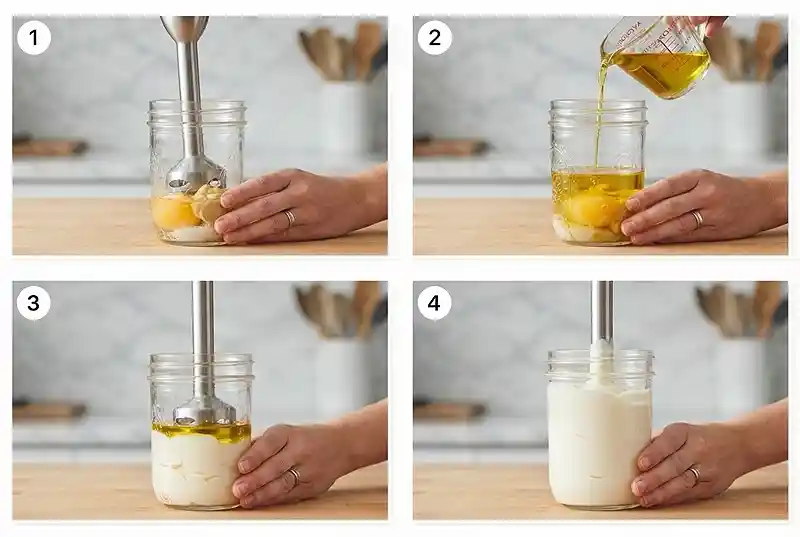
- Set up your jar. Place the egg, lemon juice, and Dijon mustard in the bottom of a cup or jar that just fits the head of your immersion blender. The egg mixture needs to reach the blades, so if it doesn’t, double the recipe.
- Add garlic and oil. Add the minced garlic if using, then pour the oil on top. Let it settle for about 15 seconds so the layers separate cleanly before blending.
- Start the emulsion. Place the head of the immersion blender at the very bottom of the jar and turn it on high speed. Do not pulse or move the head yet. You’ll see the mayonnaise start forming right at the blades, thick and pale.
- Lift and emulsify. Once the bottom layer turns creamy, slowly tilt and lift the blender head until all the oil is fully emulsified into a smooth, fluffy texture. Pro tip: if you move too fast, the mixture can break, so go slower than feels natural.
- Season and store. Season the mayonnaise to taste with kosher salt. Transfer to an airtight container and refrigerate for up to 2 weeks.
Make It Your Own
Swap the vegetable oil for a mild olive oil if you want a slightly grassier, more Mediterranean flavor. Avoid extra-virgin olive oil on its own, though, since it can turn bitter when blended at high speed.
For a dairy-free homemade mayonnaise that’s still gluten-free, this recipe already fits the bill since there’s no dairy in the original ingredient list at all. You know, that’s one of the reasons I make my own instead of scanning labels at the store.
Want a gluten-free homemade mayonnaise with more kick? Stir in a teaspoon of hot sauce or smoked paprika after the emulsion forms, not before, so it doesn’t interfere with the blending process.
If you’re avoiding eggs entirely, this particular method won’t translate well since the egg is doing the emulsifying work here. An aquafaba-based mayo needs a different ratio and technique altogether.
Common Problems & Solutions
Problem: My mayonnaise won’t thicken. Solution: your egg-to-blade contact wasn’t sufficient at the start. This usually happens when the jar is too wide, so the egg mixture spreads out instead of staying concentrated at the blades.
Problem: The mayonnaise looks broken or separated. Solution: start over with a fresh egg yolk in a clean jar, then slowly blend in the broken mixture as if it were the oil. Well, this is the exact fix that saved me the second time I made this recipe.
Problem: My mayo tastes too eggy or flat. Solution: add a touch more lemon juice or a pinch more salt. The acid brightens the flavor and balances the richness of the oil.
Problem: The texture is gummy instead of creamy. Solution: you likely moved the blender head too fast during the lifting stage. Man, oh man, slowing down during that lift is the single biggest fix for texture problems in this recipe.
Storage & Meal Prep
| Method | Duration | Notes |
|---|---|---|
| Counter | 2-3 days | Not recommended for raw-egg mayo |
| Fridge | 5-7 days | Store in an airtight container |
| Freezer | Not recommended | Emulsion breaks when thawed |
Homemade mayonnaise is best used within a week, straight from the fridge with no reheating needed. Stir it back together with a spoon if it separates slightly after a few days. Use leftovers in potato salad, tuna salad, or as a spread for gluten-free sandwich bread to avoid any waste.
Your Questions Answered
Can I make this mayonnaise ahead of time?
Yes, this mayonnaise keeps well in the fridge for 5 to 7 days in an airtight container. Making it a day or two ahead actually lets the flavors settle nicely.
Can I freeze homemade mayonnaise?
Freezing is not recommended because the emulsion breaks down and separates when thawed. It’s best made fresh and used within a week.
What can I substitute for vegetable oil?
A mild, light olive oil works well as a substitute, though extra-virgin olive oil can turn bitter when blended at high speed. Avocado oil is another neutral option that works nicely.
Is this mayonnaise safe for people with celiac disease?
Yes, every ingredient in this recipe is naturally gluten-free, including the egg, lemon juice, mustard, and oil. Just double check your Dijon mustard brand, since a small number of brands add gluten-containing fillers.
Why is my mayonnaise too thin?
A thin mayonnaise usually means the emulsion did not fully form before you started lifting the blender head. Make sure the egg mixture reaches the blender blades and keep the head still for the first 15 seconds.
Serving Suggestions
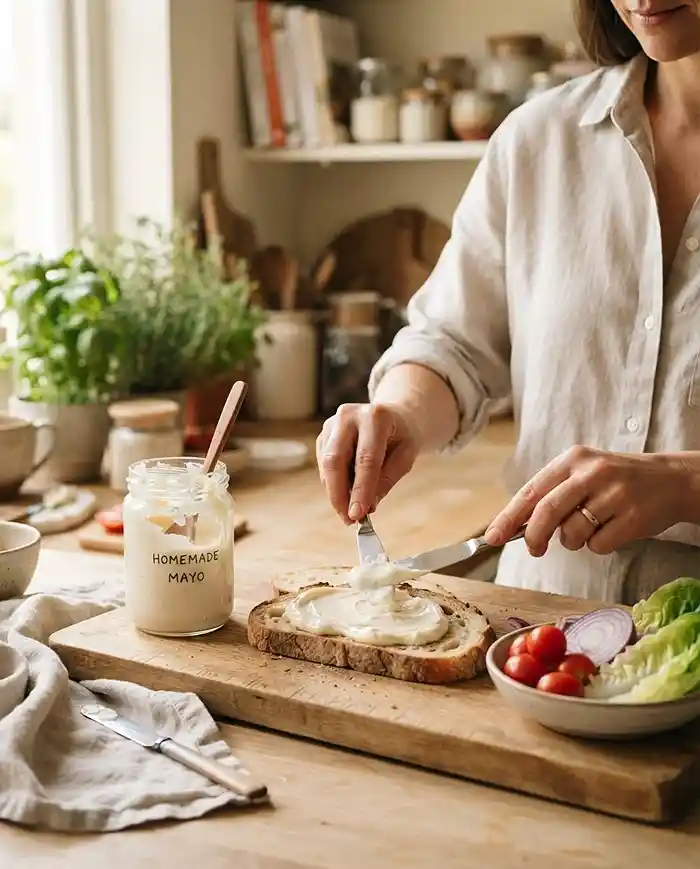
This gluten-free homemade mayonnaise is perfect for deviled eggs, chicken salad, or as the base for a quick aioli with extra garlic. It’s also a natural fit for a Fourth of July cookout spread, especially stirred into a big bowl of potato salad. Pair it with this gluten-free homemade ketchup for a full condiment lineup, or brush it into a sandwich alongside gluten-free homemade BBQ sauce for grilled chicken.
If you’re new to gluten-free cooking overall, this recipe is a great low-stress starting point. For more foundational recipes, check out this gluten-free strawberry acai refresher to round out your menu.
According to trusted celiac research from the Celiac Disease Foundation, naturally gluten-free foods like eggs, oil, and fresh lemon juice are some of the safest and most affordable staples for anyone managing celiac disease. Homemade condiments like this one help you avoid the hidden additives sometimes found in packaged versions, as outlined in this authoritative gluten-free nutrition guide from the National Institute of Diabetes and Digestive and Kidney Diseases.
Give It a Try
Grab an egg, a lemon, and your immersion blender, and give this homemade mayonnaise a shot this week. If you make it, I’d love to see it, so snap a photo and pin it for later.
Drop a comment below and let me know if you tried any of the substitutions or ran into any texture troubles. I read every single one and love hearing how it turns out in your kitchen.
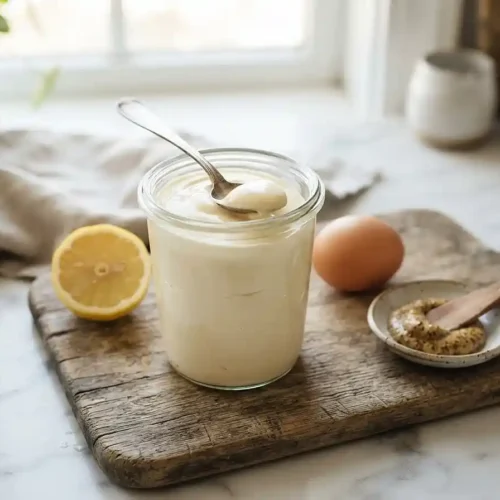
How to Make Homemade Mayonnaise (Easy 5-Minute Method)
Equipment
- Immersion blender
- Tall jar or measuring cup
- Airtight container
Ingredients
Mayonnaise
- 1 large egg
- 1 tablespoon lemon juice from about 1/2 lemon
- 1 teaspoon Dijon mustard
- 1 medium clove garlic minced, optional
- 1 cup vegetable or canola oil
- kosher salt to taste
Instructions
- Place the egg, lemon juice, and Dijon mustard into a tall jar that fits the head of your immersion blender.
- Add the minced garlic if using, then pour the oil over the top and let it settle for about 15 seconds.
- Place the immersion blender on the bottom of the jar and blend on high speed without moving it until a thick emulsion forms.
- Slowly lift and tilt the blender until all of the oil is incorporated and the mayonnaise is smooth and creamy.
- Season with kosher salt to taste, transfer to an airtight container, and refrigerate before using.