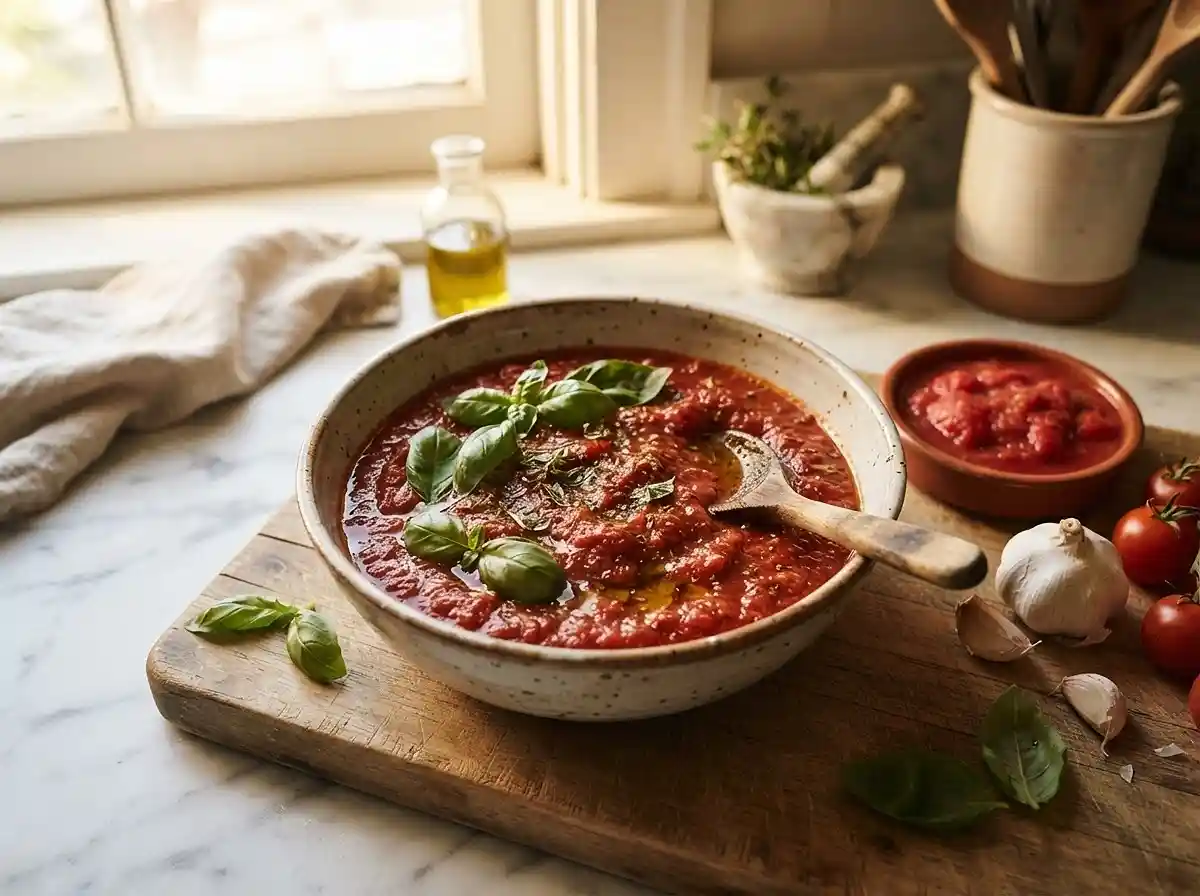
How to Make Homemade Pasta Sauce
Learn how to make homemade pasta sauce with just a handful of pantry staples. Get the easy stovetop method, ingredient notes, storage tips, and fixes for thin or bland sauce.
The first time I made homemade pasta sauce for my family, I dumped in the tomatoes way too fast and skipped scraping the pan. It tasted flat, almost tinny, and my kids picked at their noodles instead of asking for seconds.
Now how to make homemade pasta sauce is one of the first things I teach beginners in my kitchen, because it’s forgiving and comes together in one pot. You know, is there anything more comforting than a pot of sauce simmering away on a Sunday afternoon?
Table of Contents
Why You’ll Love This Homemade Pasta Sauce
- Rich, deeply savory flavor from garlic, basil, and a touch of butter that rounds out the acidity of the tomatoes
- Beginner-friendly difficulty level, made in a single pan with basic pantry ingredients
- Naturally gluten-free and free from the thickeners or gums found in many jarred sauces
- Works best for weeknight dinners, meal prep, or a big Sunday family gathering
The Secret to Perfect How to Make Homemade Pasta Sauce
This recipe works because it builds flavor in layers instead of dumping everything in one pot at once. Each step gives the ingredients time to develop before the tomatoes go in and mellow everything out.
- Sauteing the onions until they shine softens their sharpness and creates a sweet base that carries through the whole sauce
- Adding garlic after the onions prevents it from burning and turning bitter, since garlic cooks much faster than onion
- Deglazing with the first half of tomatoes lifts the browned bits stuck to the pan, which are packed with concentrated flavor
- Finishing with butter mellows the acidity of the tomatoes, giving the sauce a rounder, less sharp finish
Ingredients
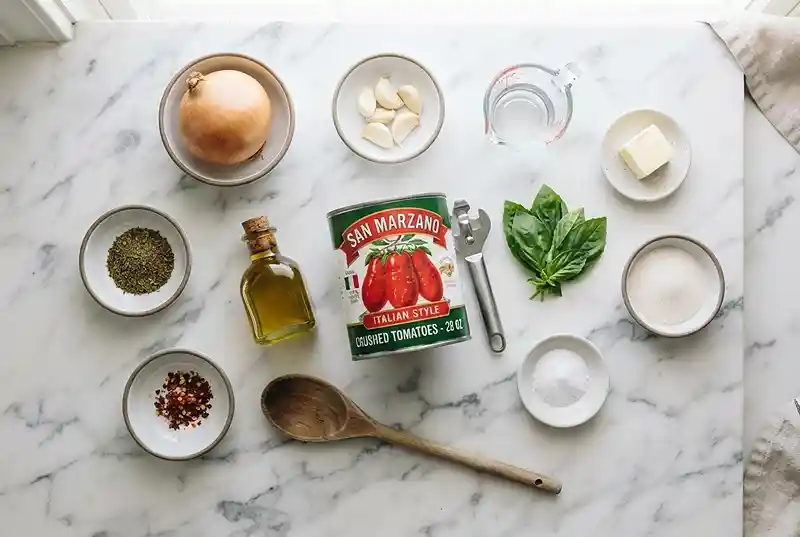
This recipe makes about 6 servings.
- 2 tablespoons olive oil
- 1 medium onion, finely diced
- 3-5 cloves garlic, minced or put through a garlic press
- 2 teaspoons dried basil
- Pinch red pepper flakes, about 1/4 teaspoon
- 1/2 teaspoon kosher salt
- 1/2 teaspoon granulated sugar
- 1 pat butter, about 2 teaspoons
- 1 (28 ounce) can crushed tomatoes
- 1/4 cup water
Note: the sugar isn’t there to make the sauce sweet, it just balances the natural acidity of canned tomatoes. Double check your crushed tomatoes are labeled gluten-free, since a few brands add wheat-based thickeners.
Instructions
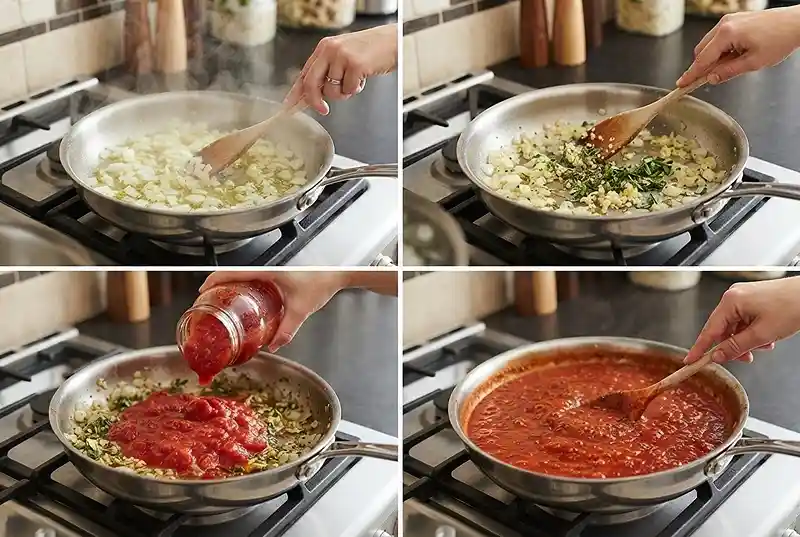
- Heat the oil. Heat the olive oil over high heat in a large pan until it shimmers. This tells you the pan is hot enough to start cooking the onions properly.
- Saute the onions. Add the onions and stir frequently until they soften and shine, about three minutes. You’ll hear them sizzle and hiss as they cook, which is exactly what you want.
- Add the garlic. Stir in the garlic and cook for an additional two minutes. Pro tip: keep stirring here, since garlic can go from golden to burnt in seconds.
- Season the base. Add the dried basil, red pepper flakes, salt, and sugar, and stir to combine. The kitchen should start smelling nutty and fragrant at this point.
- Add the butter. Stir in the butter and cook for about a minute until it melts into the onion mixture. This step mellows the tomatoes before they even hit the pan.
- Deglaze the pan. Add half of the crushed tomatoes and scrape the bottom of the pan to release any stuck-on bits. Man, oh man, this is the step that makes the biggest difference in flavor.
- Finish the sauce. Reduce the heat to low, add the remaining tomatoes, and stir in the water. If the sauce looks too thick, add a splash more water until it reaches a spoonable consistency.
- Simmer. Let the sauce simmer for 10 minutes up to a full hour, depending on how much time you have. If simmering longer, stir occasionally and add water as needed to keep the texture right.
Make It Your Own
Swap the dried basil for fresh basil if you have it on hand, using about two tablespoons and stirring it in near the end of cooking so it doesn’t turn bitter. Fresh basil gives the sauce a brighter, greener flavor than the dried version.
This gluten-free homemade pasta sauce is naturally dairy-free if you swap the butter for an extra tablespoon of olive oil. The flavor shifts slightly, landing more savory than rounded, but it still works beautifully over pasta.
Want a spicier gluten-free pasta sauce? Bump the red pepper flakes up to a half teaspoon or add a pinch of crushed Calabrian chili along with the garlic.
If you’re scaling this up for a big batch of homemade pasta sauce, double every ingredient except the salt and sugar, then adjust those to taste at the end. You know, over-salting a doubled batch is one of the most common mistakes I see.
Common Problems & Solutions
Problem: My sauce tastes too acidic or sharp. Solution: add another small pinch of sugar or an extra pat of butter to round it out. Both work by balancing the natural acid in the tomatoes without making the sauce taste sweet.
Problem: The sauce is too thin and watery. Solution: simmer it uncovered for a longer stretch, closer to 45 minutes to an hour, to let excess liquid cook off. Stir occasionally so the bottom doesn’t scorch while it reduces.
Problem: My sauce burned or scorched on the bottom. Solution: lower the heat and use a heavier-bottomed pan next time, since thin pans heat unevenly. Well, this happened to me early on, and switching pans solved it completely.
Problem: The garlic tastes bitter. Solution: this almost always means the garlic cooked too long or too hot before the tomatoes went in. Keep the heat moderate once garlic hits the pan and stir constantly for those two minutes.
Storage & Meal Prep
| Method | Duration | Notes |
|---|---|---|
| Counter | 2-3 days | Airtight container |
| Fridge | 5-7 days | Bring to room temp |
| Freezer | 2-3 months | Wrap individually |
Reheat this sauce gently on the stovetop over low heat, stirring occasionally and adding a splash of water if it’s thickened up in the fridge. Freeze leftovers in individual portions so you can grab exactly what you need for a quick weeknight dinner. Extra sauce also works well spooned over roasted vegetables or stirred into gluten-free rice for a no-waste lunch.
Your Questions Answered
Can I make this pasta sauce ahead of time?
Yes, this sauce keeps well in the fridge for 5 to 7 days in an airtight container. Making it a day ahead actually lets the flavors deepen even more.
Can I freeze homemade pasta sauce?
Yes, this sauce freezes well for 2 to 3 months when wrapped in individual portions. Thaw it in the fridge overnight before reheating gently on the stove.
What can I substitute for butter in this sauce?
An extra tablespoon of olive oil works well in place of the butter for a dairy-free version. The flavor shifts slightly savory but still tastes great over pasta.
Is this pasta sauce safe for people with celiac disease?
Yes, every ingredient in this recipe is naturally gluten-free, including the crushed tomatoes, onion, garlic, and seasonings. Just double check your canned tomatoes are labeled gluten-free, since a few brands add wheat-based thickeners.
Why is my pasta sauce too thick?
If the sauce turns out too thick, simply stir in a splash of water until it reaches a spoonable consistency. This is common if the sauce simmered longer than expected without extra water added.
Serving Suggestions
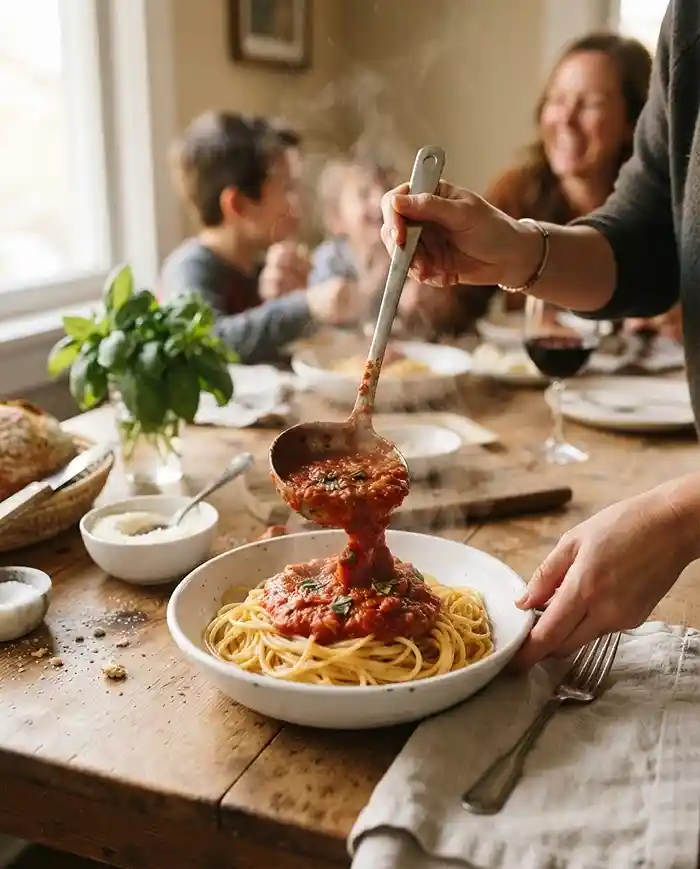
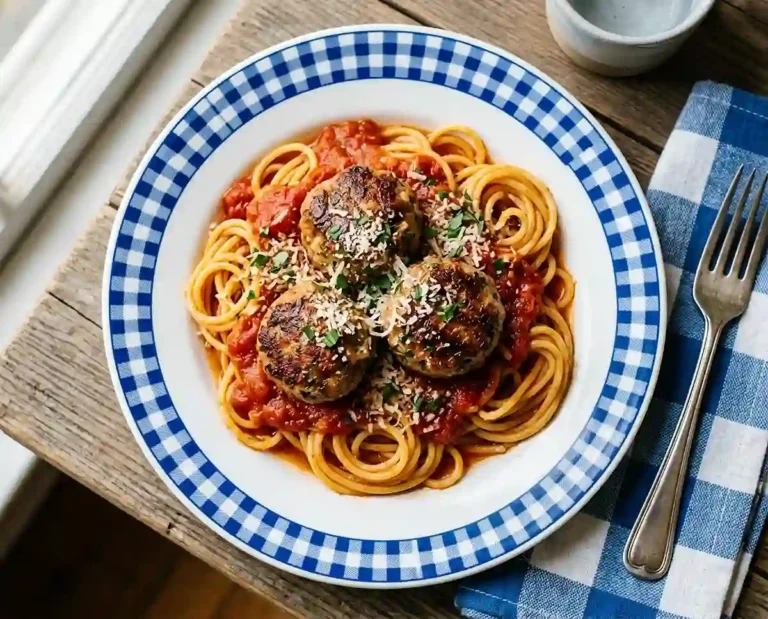
This gluten-free homemade pasta sauce is perfect over your favorite gluten-free pasta, spooned onto baked chicken, or layered into a quick gluten-free lasagna. It’s also a natural fit for a big Sunday family dinner, the kind where everyone gathers around one pot on the stove. Pair it with this gluten-free homemade BBQ sauce if you’re building out a full sauce lineup, or serve alongside gluten-free homemade ketchup for a kid-friendly dinner spread.
If you’re new to gluten-free cooking, this sauce is a great low-stress starting point. For a refreshing drink to round out the meal, try this gluten-free strawberry acai refresher.
According to trusted celiac research from the Celiac Disease Foundation, building meals around naturally gluten-free staples like tomatoes, onions, and olive oil is one of the most affordable and reliable ways to eat safely. As outlined in this authoritative gluten-free nutrition guide from the National Institute of Diabetes and Digestive and Kidney Diseases, homemade sauces also help you sidestep hidden gluten additives found in some packaged jars.
Give It a Try
Grab a can of crushed tomatoes and give this homemade pasta sauce a try this week. If you make it, I’d love to see it, so snap a photo and pin it for later.
Drop a comment below and let me know if you tried any of the substitutions or ran into any flavor troubles. I read every single one and love hearing how it turns out in your kitchen.
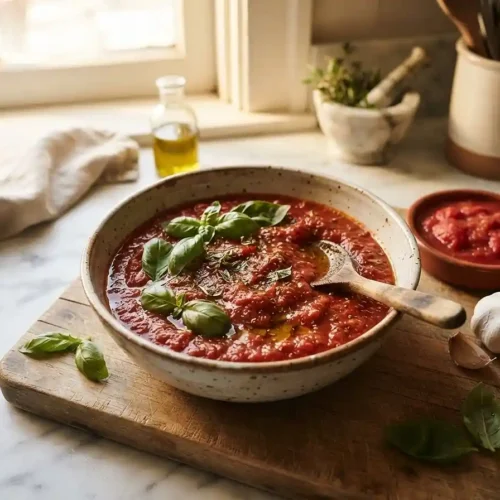
How to Make Homemade Pasta Sauce (Easy Stovetop Method)
Equipment
- Large pan
- Wooden spoon
- Measuring spoons
- Measuring cup
- Knife
- Cutting board
Ingredients
Pasta Sauce
- 2 tablespoons olive oil
- 1 medium onion finely diced
- 3-5 cloves garlic minced or pressed
- 2 teaspoons dried basil
- ¼ teaspoon red pepper flakes or pinch
- ½ teaspoon kosher salt
- ½ teaspoon granulated sugar
- 2 teaspoons butter about 1 pat
- 28 ounces crushed tomatoes 1 can
- ¼ cup water
Instructions
- Heat the olive oil in a large pan over high heat until shimmering.
- Add the diced onion and cook for about 3 minutes, stirring frequently until softened and glossy.
- Stir in the garlic and cook for 2 minutes, stirring constantly to prevent burning.
- Add the basil, red pepper flakes, salt, and sugar, then stir to combine.
- Stir in the butter and cook until melted.
- Add half of the crushed tomatoes and scrape the bottom of the pan to loosen any browned bits.
- Add the remaining crushed tomatoes and water, then reduce the heat to low and stir well.
- Simmer for 10 to 60 minutes, stirring occasionally and adding more water if needed until the desired consistency is reached.