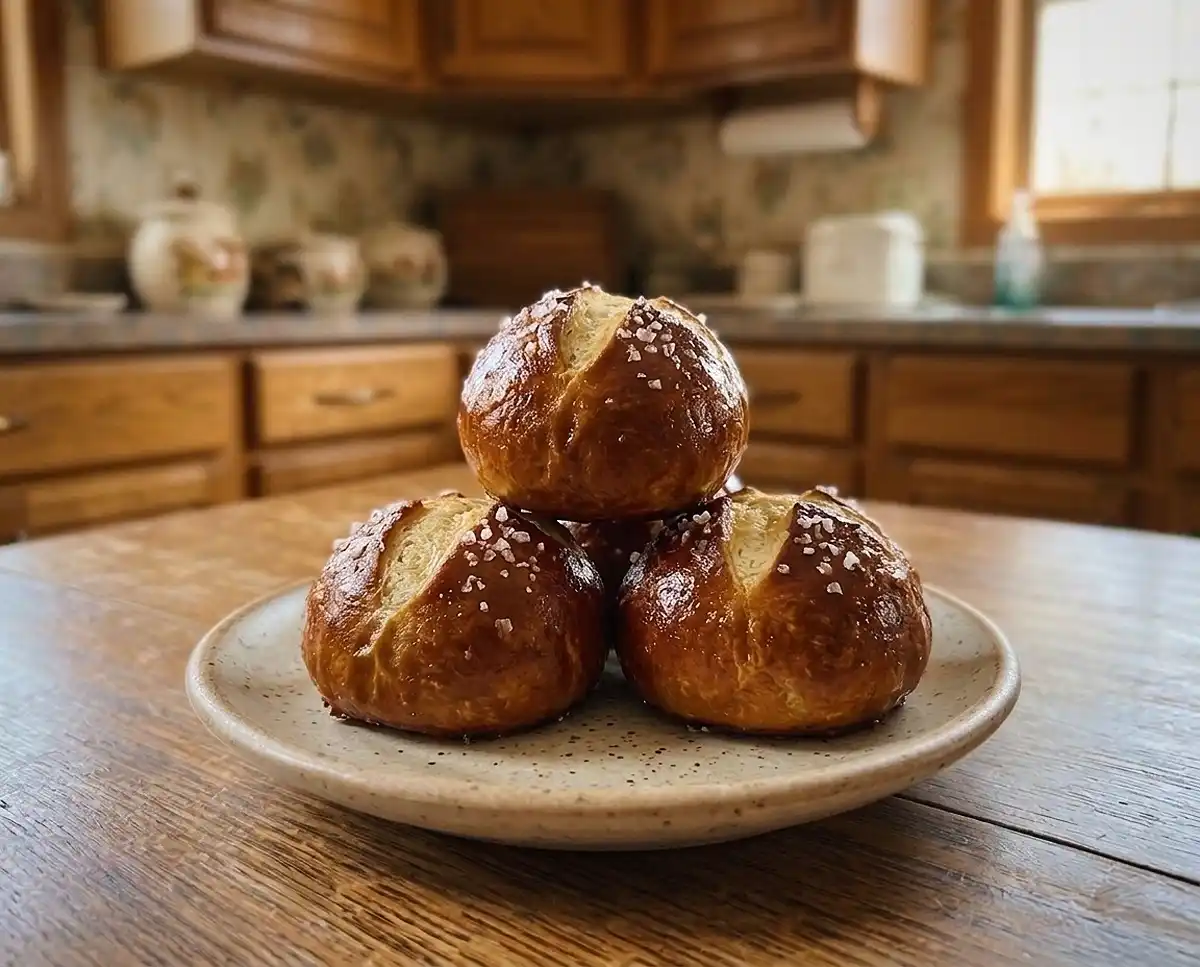
Gluten-Free Pretzel Rolls
Make gluten-free pretzel rolls at home with a quick baking soda bath. Get the ingredients, step-by-step method, and tips for chewy, golden rolls.
I learned the hard way that gluten-free dough is not wheat dough. My first batch of gluten-free pretzel rolls came out so dense that my kids used them as hockey pucks in the hallway. I had dumped in extra flour because the dough felt sticky.
Ever wondered why bakery-style pretzel rolls seem impossible to recreate without wheat? Honestly… the answer is mostly technique, not fancy ingredients. A short baking soda bath, a slightly tacky dough, and a hot oven give you a glossy, chewy crust.
These gluten-free pretzel rolls bring a soft, chewy center and golden, salty crust to any party spread! Explore more gluten-free party snacks for crowd-pleasing bites that might steal the spotlight at your next gathering!
What Makes This Gluten-Free Pretzel Rolls Recipe Worth Making
- Texture and flavor: the crust crackles like fresh snow underfoot, and the inside stays soft and chewy.
- Beginner-friendly: you shape simple balls instead of twisting traditional pretzels, so there is no tricky rolling.
- Family-friendly: the rolls are soft inside, and kids can help shape the dough balls.
- Best for: sandwiches, soup night, lunchboxes, and snack tables where everyone reaches for the bread first.
The Science Behind Great Gluten-Free Pretzel Rolls
Three things set these rolls apart: the baking soda bath, the flour blend, and a dough you resist over-flouring. Each one solves a common gluten-free problem like pale crust or dry crumb.
- The baking soda bath browns the crust. Baking soda makes the water alkaline, and that changes the surface of the dough so it browns deeper and faster in the oven.
- Xanthan gum replaces gluten structure. Without gluten, dough needs help trapping gas from the yeast. A blend that contains xanthan gum gives the dough enough stretch to hold its shape.
- A short boil sets the surface. Just 20 to 30 seconds in hot water firms up the outside of each roll, which helps it keep its shape in the oven.
- Less flour keeps the crumb moist. Gluten-free flours absorb a lot of liquid, so extra flour turns rolls dry and crumbly. A slightly tacky dough bakes up tender.
If you enjoy kitchen science, this explainer on how the Maillard reaction browns baked goods covers why the alkaline bath works.
For German-style purists, this piece on the chemistry behind a proper pretzel crust compares lye with baking soda.
Table of Contents
Ingredients
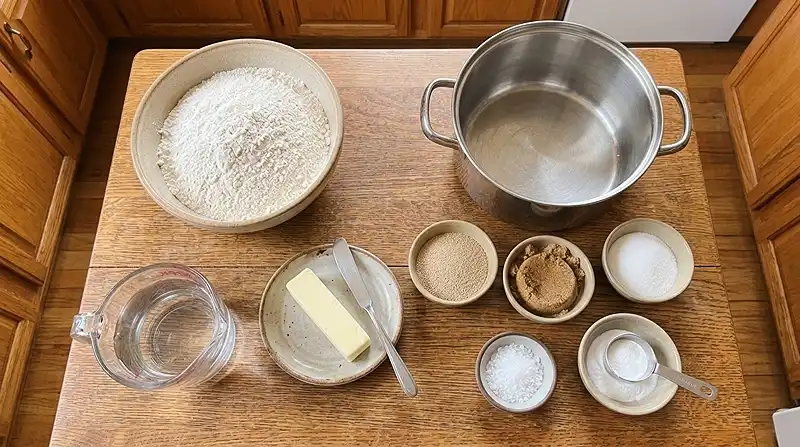
This recipe makes 12 pretzel rolls. Choose a flour blend suitable for yeast baking and labeled gluten-free.
For the dough
- 1½ cups (360 ml) warm water
- 2¼ teaspoons (7 g) instant or active dry yeast
- ¼ cup (4 tablespoons; 56 g) unsalted butter, divided
- 1 teaspoon salt
- 1 tablespoon brown sugar
- 3¾–4 cups (469–500 g) gluten-free all-purpose flour blend suitable for yeast baking, preferably containing xanthan gum, plus more as needed
- Coarse sea salt, for sprinkling
For the baking soda bath
- ½ cup (120 g) baking soda
- 9 cups (2.16 L) water
Ingredient note: a flour blend with xanthan gum already in it saves you a step. If yours has none, check the package directions for the blend before you start.
Instructions
Make the Dough
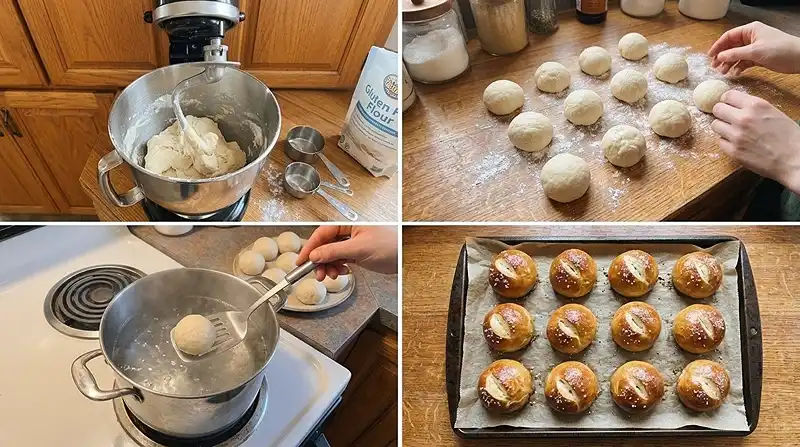
- Activate the yeast. Whisk the yeast and warm water together in the bowl of a stand mixer or a large mixing bowl. Let stand for 1 minute.
- Add the butter and seasonings. Melt 1 tablespoon of the butter. Whisk it into the yeast mixture along with the salt and brown sugar.
- Make the dough. Gradually add 3 cups of gluten-free flour, 1 cup at a time, mixing with a wooden spoon or dough hook until a thick dough forms. Add another ¾ cup flour and mix until the dough is soft and no longer excessively sticky. Add the remaining ¼–½ cup only if needed, because gluten-free dough may remain slightly tacky.
- Knead. Using a stand mixer, mix the dough for about 5 minutes, or knead by hand on a lightly floured gluten-free work surface for 5 minutes. Add additional flour only a teaspoon at a time if the dough is excessively sticky. Pro tip: avoid adding too much flour, as this can make the rolls dry.
- Let the dough rise. Place the dough in a lightly greased large bowl. Cover tightly and let rise in a warm, draft-free place for about 1 hour, or until noticeably expanded. The dough may not double as dramatically as traditional wheat dough.
Shape and Prep
- Shape the rolls. Gently deflate the risen dough. Transfer it to a lightly floured gluten-free work surface and divide it into 12 equal portions of about 75 g each. Shape each portion into a smooth ball, gently tightening the surface as you form it.
- Prepare the oven and pan. Preheat the oven to 400°F (204°C). Line a baking sheet or 9 × 13-inch baking pan with parchment paper.
Boil and Bake
- Prepare the baking soda bath. Bring the 9 cups of water and baking soda to a boil in a large pot. Carefully lower 1–2 pretzel rolls into the boiling water at a time. Boil for 20–30 seconds only.
- Transfer the rolls. Remove each roll with a slotted spatula, allowing excess water to drain. Place the rolls on the prepared baking sheet or close together in the baking pan. Use a sharp knife to make two small slits across the top of each roll.
- Add butter and salt. Melt the remaining butter and lightly brush each roll. Sprinkle the tops with coarse sea salt.
- Bake. Bake for 22–26 minutes, or until the rolls are deeply golden brown and cooked through.
- Serve. Remove from the oven and serve warm. Store cooled rolls in an airtight container or zip-top bag for up to 3 days.
Ways to Customize This Recipe
For cinnamon pretzel rolls, skip the coarse sea salt and sprinkle the buttered tops with cinnamon sugar instead. The butter helps the cinnamon sugar stick, and the sweet topping tastes like a warm cinnamon pretzel from the mall.
Look… cheese makes everything better, and these rolls are no exception. Serve them with warm cheese dip for dunking, or tuck a small cube of cheese inside each ball and pinch the seam tightly so it does not leak into the bath.
For a German-style spread, serve the rolls with spicy mustard and sliced sausage. Traditional German pretzels use a lye bath for a darker crust, but a baking soda bath gets you close without handling a caustic ingredient at home.
To make them dairy-free, replace the unsalted butter with a dairy-free butter alternative. Use the same amount, and brush it on the tops the same way. The rolls will still brown well because the bath does most of the work.
If Something Went Wrong, Start Here
Problem: the rolls are dry and crumbly. Use less flour next time, and add extra only a teaspoon at a time. Gluten-free flours soak up liquid, so too much flour leaves nothing to keep the crumb moist.
Problem: the dough is too sticky to handle. Lightly flour your gluten-free work surface and your hands rather than the dough itself. Slightly tacky is normal for this dough, and a stand mixer makes the kneading step easier.
Oh wow… the rolls did not rise much. Give the dough its full hour in a warm, draft-free spot, and remember it may not double like wheat dough. If your yeast is old, replace it, because tired yeast gives dense rolls.
Problem: the crust is pale. Make sure the water is at a full boil before each roll goes in, and boil for 20 to 30 seconds. Then bake until the rolls are deeply golden brown, since the bath only works when the oven finishes the job.
Problem: the rolls collapse in the pot. Lower only 1 or 2 rolls at a time, and lift them out right after 30 seconds. Longer boiling softens the surface too much, and overcrowding makes the rolls stick together.
Storage & Meal Prep
| Method | Duration | Notes |
|---|---|---|
| Counter | Up to 3 days | Airtight container or zip-top bag, once cooled |
| Fridge | Not recommended | Refrigeration can dry out gluten-free bread |
| Freezer | 2-3 months | Wrap individually |
Warm leftover rolls in a hot oven for a few minutes to bring back the crisp crust. Skip the microwave if you can, because it leaves the crust soft. Day-old rolls make great sandwich buns, croutons, or gluten-free breadcrumbs.
Frequently Asked Questions
Can I make gluten-free pretzel rolls ahead of time?
Yes, you can. Store cooled rolls in an airtight container or zip-top bag for up to 3 days. For longer storage, wrap each roll individually and freeze them.
How do I get a darker, golden crust?
Boil each roll in the baking soda bath for 20 to 30 seconds. The alkaline water helps the crust brown in the oven. Then bake until the rolls are deeply golden brown and cooked through, about 22 to 26 minutes.
What’s the best flour for gluten-free pretzel rolls?
Use a gluten-free all-purpose flour blend suitable for yeast baking. Choose one that preferably contains xanthan gum, since it helps the dough hold its structure. The blend should also be labeled gluten-free.
Why did my rolls turn out dry?
The dough most likely had too much flour. Gluten-free dough should stay slightly tacky, so add extra flour only a teaspoon at a time. Too much flour absorbs the moisture the crumb needs.
Can I skip the baking soda bath?
You can, but the rolls will not have true pretzel flavor or color. The quick boil gives the crust its deep color and signature flavor. Without it, you get plain soft dinner rolls.
Serving Suggestions
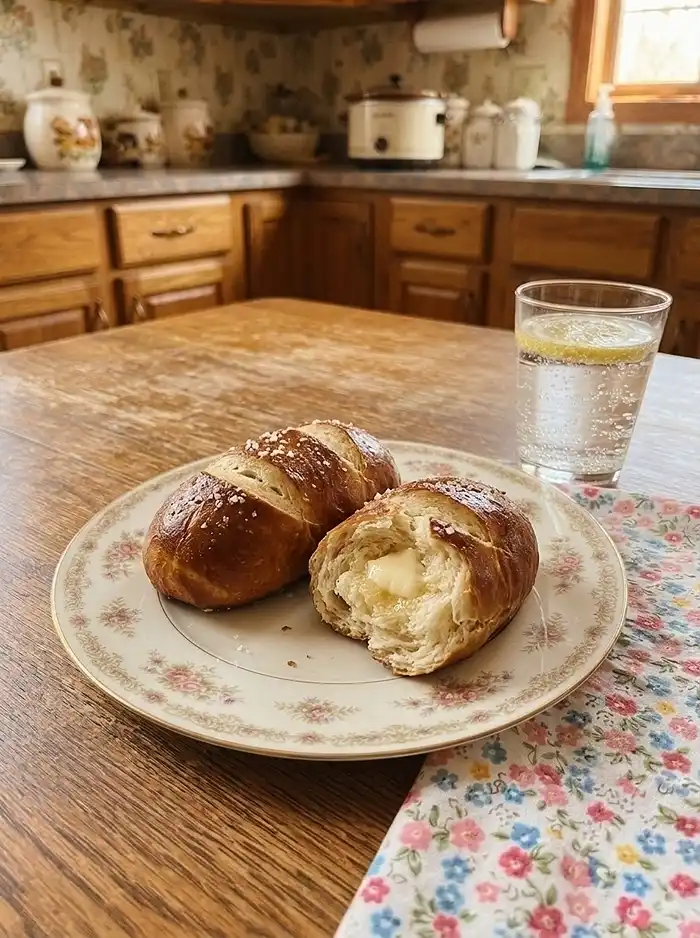
Warm pretzel rolls shine next to soup, sliced sausage, or a bowl of cheese dip with mustard. They are a hit on our Super Bowl snack table, where a basket of them disappears before halftime. You can also split them for sliders filled with slow cooker teriyaki meatballs.
If you love the salty-sweet pretzel combination, try these no-bake salted caramel pretzel bars for dessert.
For another savory snack idea, these Korean street food skewers pair nicely with a casual spread.
If you bake these gluten-free pretzel rolls, tell me how they turned out in the comments. Leave a star rating, and share any twists you tried, like cinnamon sugar or cheese.
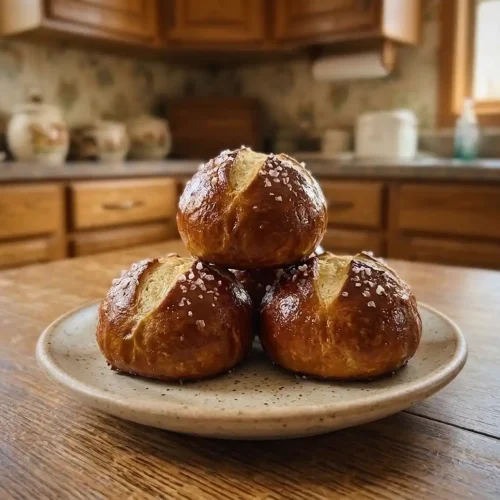
Gluten-Free Pretzel Rolls
Equipment
- Stand mixer or wooden spoon
- Large mixing bowl
- Whisk
- Measuring cups and spoons
- Large pot
- Slotted spatula
- Baking sheet or 9 × 13-inch baking pan
- Parchment paper
- Sharp knife
- Pastry brush
Ingredients
For the dough
- 1½ cups warm water 360 ml
- 2¼ teaspoons instant or active dry yeast 7 g
- ¼ cup unsalted butter 56 g; divided
- 1 teaspoon salt
- 1 tablespoon brown sugar
- 3¾–4 cups gluten-free all-purpose flour blend suitable for yeast baking 469–500 g, preferably containing xanthan gum, plus more as needed
- to taste coarse sea salt for sprinkling
For the baking soda bath
- ½ cup baking soda 120 g
- 9 cups water 2.16 L
Instructions
- Activate the yeast. Whisk the yeast and warm water together in the bowl of a stand mixer or a large mixing bowl. Let stand for 1 minute.
- Add the butter and seasonings. Melt 1 tablespoon of the butter. Whisk it into the yeast mixture along with the salt and brown sugar.
- Make the dough. Gradually add 3 cups of gluten-free flour, 1 cup at a time, mixing with a wooden spoon or dough hook until a thick dough forms. Add another ¾ cup flour and mix until the dough is soft and no longer excessively sticky. Add the remaining ¼–½ cup only if needed, because gluten-free dough may remain slightly tacky.
- Knead. Using a stand mixer, mix the dough for about 5 minutes, or knead by hand on a lightly floured gluten-free work surface for 5 minutes. Add additional flour only a teaspoon at a time if the dough is excessively sticky. Avoid adding too much flour, as this can make the rolls dry.
- Let the dough rise. Place the dough in a lightly greased large bowl. Cover tightly and let rise in a warm, draft-free place for about 1 hour, or until noticeably expanded. The dough may not double as dramatically as traditional wheat dough.
- Shape the rolls. Gently deflate the risen dough. Transfer it to a lightly floured gluten-free work surface and divide it into 12 equal portions of about 75 g each. Shape each portion into a smooth ball, gently tightening the surface as you form it.
- Prepare the oven and pan. Preheat the oven to 400°F (204°C). Line a baking sheet or 9 × 13-inch baking pan with parchment paper.
- Prepare the baking soda bath. Bring the 9 cups of water and baking soda to a boil in a large pot. Carefully lower 1–2 pretzel rolls into the boiling water at a time. Boil for 20–30 seconds only.
- Transfer the rolls. Remove each roll with a slotted spatula, allowing excess water to drain. Place the rolls on the prepared baking sheet or close together in the baking pan. Use a sharp knife to make two small slits across the top of each roll.
- Add butter and salt. Melt the remaining butter and lightly brush each roll. Sprinkle the tops with coarse sea salt.
- Bake. Bake for 22–26 minutes, or until the rolls are deeply golden brown and cooked through.
- Serve. Remove from the oven and serve warm. Store cooled rolls in an airtight container or zip-top bag for up to 3 days.