
Gluten-Free Nestle Toll House Cookie Recipe
My first attempt at a gluten-free Nestle Toll House cookie recipe baked into sandy, gritty discs that crumbled in my hand. I’d skipped the dough rest because I was impatient and the kids were hungry. That batch taught me that gluten-free flour needs time to hydrate before it ever sees the oven.
Honestly… I almost gave up on gluten-free chocolate chip cookies after that. Then I rested the dough for 20 minutes on a whim, and everything changed. The cookies held together, the edges browned evenly, and the flavor finally tasted like a real cookie.
These won’t taste identical to the wheat version. They’re a little more tender, with a slightly finer crumb, but the buttery brown sugar flavor and melty chocolate come through. The recipe makes about 4-5 dozen cookies, depending on the size.
Table of Contents
What Makes This Gluten-Free Toll House Cookie Different
- Texture payoff. You get lightly golden edges and centers that stay soft like warm brownie batter.
- Beginner-friendly. This is a true beginner recipe. The only unusual step is the 20-30 minute dough rest.
- Flexible add-ins. The walnuts are optional, so you can make a nut-free batch for lunchboxes and school events.
- Great for cookie swaps and weeknights. It makes a big batch, and the baked cookies freeze well.
The Fix Behind Every Common Gluten-Free Nestle Toll House Cookie Recipe Failure
Most gluten-free cookie failures come down to dry flour, too much mixing, or too much heat. Each technique below targets one of those problems.
- The dough rest fixes grittiness. Gluten-free flour blends are made of starches that absorb liquid slowly. Resting lets them fully hydrate, so the cookies bake up tender instead of sandy.
- A flour blend with xanthan gum fixes crumbling. Xanthan gum mimics the structure gluten normally provides. Without it, the dough has nothing to hold the crumb together.
- Room-temperature eggs prevent greasy dough. Cold eggs can cause the creamed butter to seize and separate. Room-temperature eggs emulsify smoothly into the butter and sugar.
- Pulling the cookies while the centers look soft fixes dryness. Cookies keep cooking from residual heat on the hot pan. Underbaking slightly and cooling on the sheet sets the center without drying it out.
Ingredients
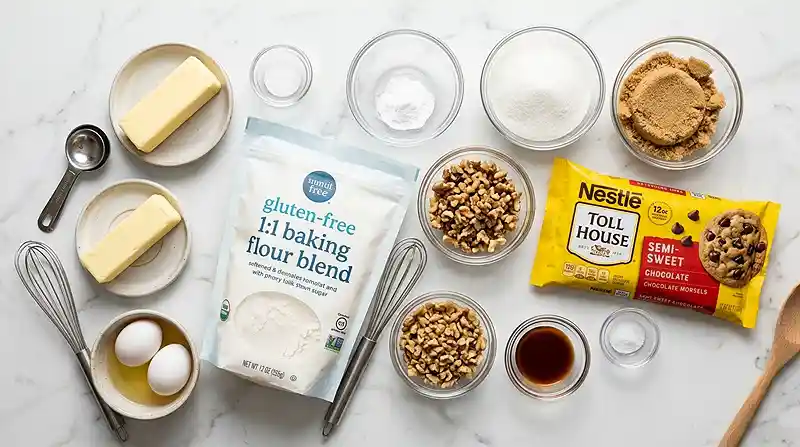
This recipe makes approximately 4-5 dozen cookies, depending on the size. Measure the flour carefully, since too much will dry out the dough.
Dry Ingredients
- 2 ¼ cups gluten-free all-purpose 1:1 baking flour blend with xanthan gum
- 1 tsp baking soda
- 1 tsp salt
Wet Ingredients
- 1 cup unsalted butter, softened
- ¾ cup granulated sugar
- ¾ cup packed brown sugar
- 1 tsp vanilla extract
- 2 large eggs, room temperature
Mix-Ins
- 2 cups (12 oz) Nestlé Toll House semi-sweet chocolate morsels, verified gluten-free according to the package label
- 1 cup chopped walnuts, optional
Chocolate morsels: Always check the package label, since specialty flavors can differ. This guide to gluten-free chocolate chip brands explains what to look for.
Flour blend: Use a 1:1 blend that already contains xanthan gum. Check labels and read up on cross-contact at the Celiac Disease Foundation if you’re cooking for someone with celiac disease.
Instructions
Mix the Dough
- Preheat the oven to 375°F (190°C). Line baking sheets with parchment paper.
- In a small bowl, whisk together the gluten-free flour, baking soda, and salt. Whisking spreads the baking soda evenly so you don’t get bitter pockets.
- In a large mixing bowl, beat the softened butter, granulated sugar, brown sugar, and vanilla until creamy, about 2-3 minutes. The mixture should look pale and fluffy.
- Add the eggs one at a time, beating well after each addition. This helps the mixture emulsify instead of looking curdled.
- Gradually mix in the flour mixture until just combined. Avoid overmixing.
- Stir in the chocolate morsels and chopped walnuts, if using.
What I learned: I used to mix until the dough looked perfectly smooth. That made the cookies tough, so now I stop the moment the last streak of flour disappears.
Rest, Scoop, and Bake
- Let the dough rest for 20-30 minutes so the gluten-free flour can hydrate. The dough will look thicker and less sticky when it’s ready.
- Drop rounded tablespoons of dough onto the prepared baking sheets, leaving about 2 inches between cookies.
- Bake for 9-12 minutes, until the edges are lightly golden and the centers still look slightly soft.
- Cool on the baking sheet for 5 minutes before transferring to a wire rack to cool completely. The cookies firm up as they cool.
What I learned: I used to move the cookies right away, and they’d fall apart. Those five minutes on the hot pan let the structure set.

Swap It Without Breaking It
Walnuts: Leave them out for nut-free gluten-free chocolate chip cookies. The dough doesn’t need extra flour or liquid to make up for them. Cookies without nuts will be a bit softer and sweeter.
Flour blend: Here’s the thing… flour blends vary widely, and swapping brands can change spread and texture. Stick with a 1:1 blend that includes xanthan gum. If you change brands, rest the dough a few extra minutes and bake one test cookie first.
Chocolate morsels: Other gluten-free chocolate chips work if they’re labeled gluten-free. Semi-sweet gives the classic flavor of the Nestle Toll House cookie recipe. Dark chocolate makes a less sweet cookie.
Sugar and butter: Don’t reduce the sugar or swap in a different fat. Sugar helps the cookies spread and stay tender, and butter provides flavor and structure. Changing either one usually leads to dry, cakey, or greasy cookies.
When Things Go Sideways
Problem: Gritty, sandy cookies. Rest the dough for the full 20-30 minutes. The starches in gluten-free flour need time to soak up the liquid. Skipping the rest leaves dry flour that you can feel in each bite.
Problem: Cookies spread flat. Use softened butter, not melted, and bake on cool pans lined with parchment. Warm butter melts too fast in the oven before the structure sets. Let baking sheets cool completely between batches.
Problem: Dry, crumbly cookies. Measure the flour carefully and don’t overbake. Scooping flour straight from the bag packs in too much. Pull the cookies while the centers still look slightly soft.
Problem: Dense, cakey cookies. Oh boy, I’ve overmixed more batches than I’d like to admit. Mix only until the flour disappears. Extra beating adds air and develops a cake-like crumb.
Problem: Gummy centers. Let the cookies cool fully on the pan and then on a rack. Gluten-free cookies keep setting as they cool, so cutting the bake short or moving them early leaves the middle doughy. The 5-minute pan rest matters here.
Storage & Meal Prep
| Method | Duration | Notes |
|---|---|---|
| Counter | 2-3 days | Airtight container |
| Fridge | 5-7 days | Bring to room temp |
| Freezer | 2-3 months | Wrap individually |
To refresh a day-old cookie, warm it in the microwave for about 10 seconds. You can also freeze scooped dough balls and bake them straight from the freezer, adding a minute or two to the bake time. Crumbled cookies make a great topping for ice cream or yogurt.
Serving Suggestions

Serve these cookies warm with cold milk, or pack them in lunchboxes. They’re also a good fit for a holiday cookie swap, since one batch makes a lot.
For a savory snack alongside them, try these pumpkin ranch pretzel bites. For dinner, this creamy Tuscan sausage gnocchi skillet is a cozy choice.
For a lighter morning option, try these pomegranate pear breakfast chia bowls.
Gluten-Free nestle toll house cookie recipe FAQs
Can I make these cookies without walnuts?
Yes, the walnuts are optional and you can leave them out without changing anything else. The cookies will be slightly softer and sweeter.
How do I keep gluten-free cookies from spreading?
Use softened (not melted) butter, rest the dough, and bake on cool parchment-lined sheets. Warm butter and hot pans make dough melt before it sets.
What’s the best flour for gluten-free Toll House cookies?
A gluten-free all-purpose 1:1 baking flour blend that already contains xanthan gum works best. The xanthan gum provides the structure that keeps cookies from crumbling.
Why did my gluten-free cookies turn out gritty?
Gritty cookies usually mean the flour didn’t have time to hydrate. Rest the dough for 20-30 minutes before baking so the starches can absorb the liquid.
Is it worth resting the cookie dough?
Yes, it’s the single most important step. Is 20 minutes really too much to ask for a cookie that isn’t sandy? Resting hydrates the flour and gives you a softer, more even texture.
Final Thoughts
This gluten-free Nestle Toll House cookie recipe depends on one habit: resting the dough. Give it 20 minutes, and you’ll get tender cookies with golden edges and soft centers.
Try the recipe, pin it for later, and leave a rating below. If a batch doesn’t go as planned, tell me in the comments. Your failures help other bakers as much as your wins.

Gluten-Free Nestle Toll House Cookie Recipe
Equipment
- Mixing bowls
- Whisk
- Electric mixer
- Measuring cups and spoons
- Baking sheets
- Parchment paper
- Cookie scoop or tablespoon
- Wire cooling rack
Ingredients
Dry Ingredients
- 2 ¼ cups gluten-free all-purpose 1:1 baking flour blend Use a blend that already contains xanthan gum
- 1 tsp baking soda
- 1 tsp salt
Wet Ingredients
- 1 cup unsalted butter Softened
- ¾ cup granulated sugar
- ¾ cup brown sugar Packed
- 1 tsp vanilla extract
- 2 large eggs Room temperature
Mix-Ins
- 2 cups (12 oz) Nestlé Toll House semi-sweet chocolate morsels Verify gluten-free status on the package label
- 1 cup walnuts Chopped; optional
Instructions
- Preheat the oven to 375°F (190°C). Line baking sheets with parchment paper.
- In a small bowl, whisk together the gluten-free flour, baking soda, and salt.
- In a large mixing bowl, beat the softened butter, granulated sugar, brown sugar, and vanilla extract until creamy, pale, and fluffy, about 2–3 minutes.
- Add the eggs one at a time, beating well after each addition until incorporated.
- Gradually mix in the flour mixture until just combined. Avoid overmixing.
- Stir in the chocolate morsels and chopped walnuts, if using.
- Let the dough rest for 20–30 minutes so the gluten-free flour can hydrate.
- Drop rounded tablespoons of dough onto the prepared baking sheets, leaving about 2 inches between cookies.
- Bake for 9–12 minutes, until the edges are lightly golden and the centers still look slightly soft.
- Cool on the baking sheet for 5 minutes before transferring the cookies to a wire rack to cool completely.